
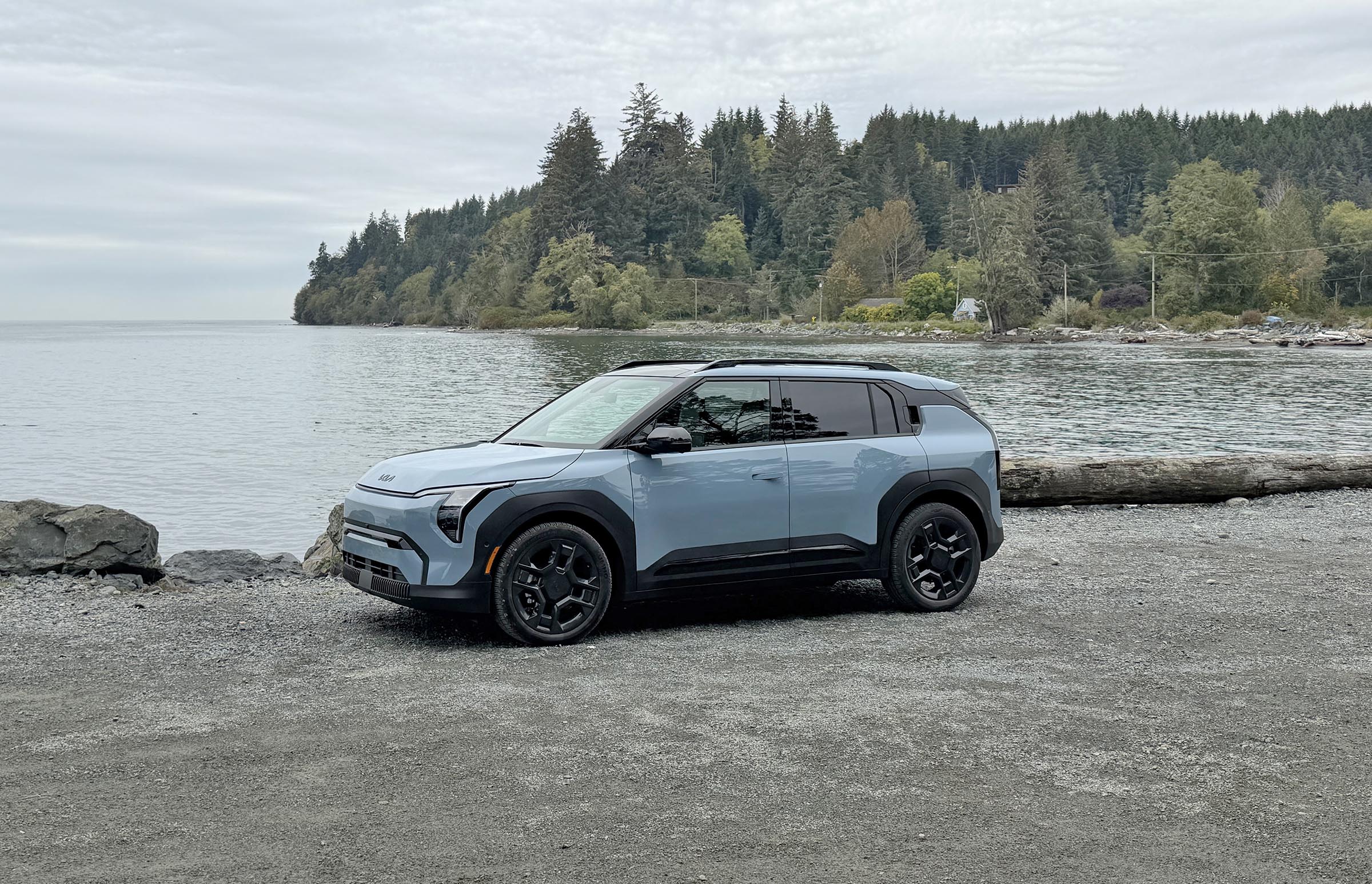
***This story first appeared on TheCarCollective.Substack.com.***
While most manufacturers have slashed their battery-electric programs, charges ahead with the launch of the affordable new EV3. What does it see that other brands don’t?
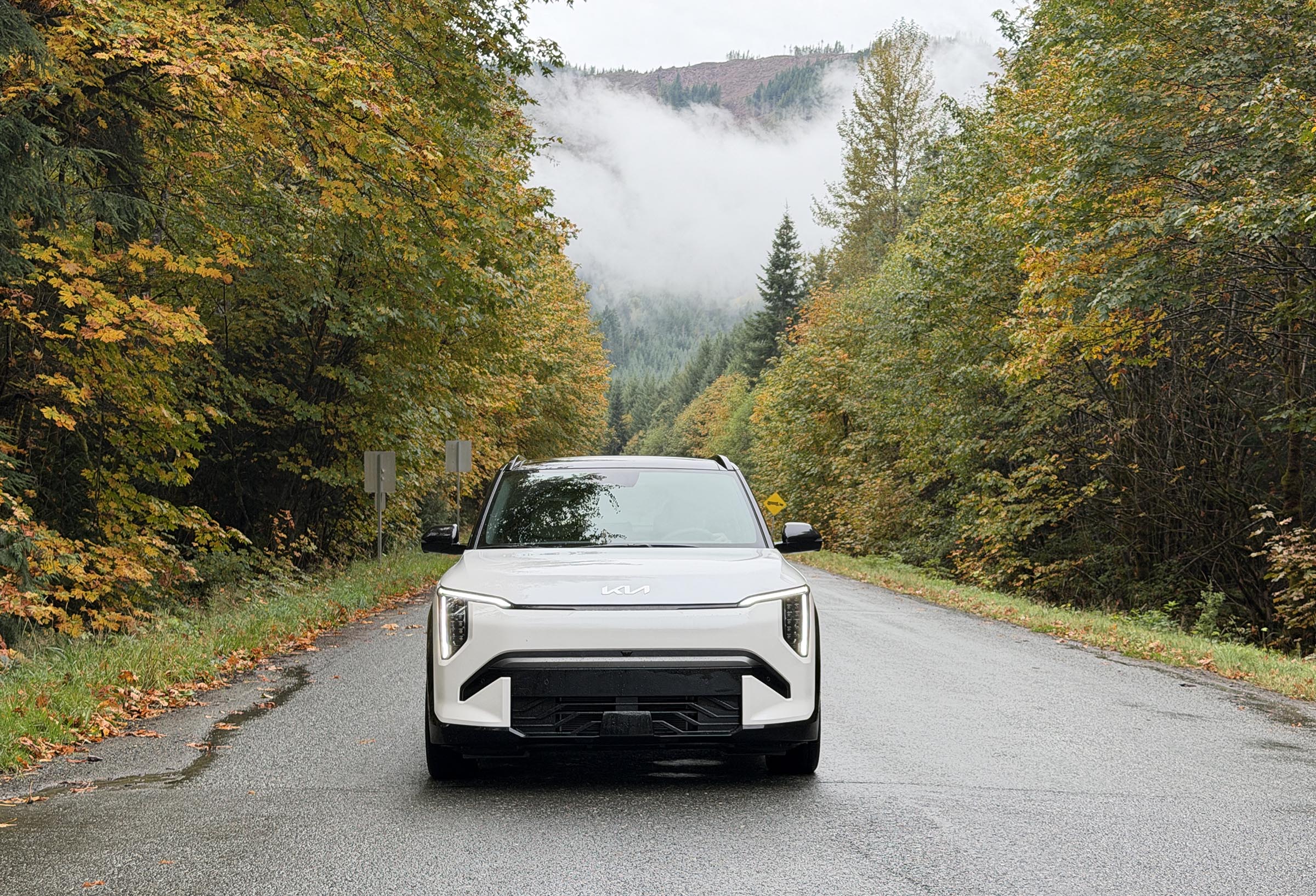
Taking my first drive in a Kia EV3 on Vancouver Island.
To mix metaphors, the 2027 Kia EV3 fires on all cylinders: attractive, affordable, with great range, quick charging and good performance. Or so I discovered during a recent test drive on Vancouver Island, off the scenic coast of British Columbia.
EV3 is the latest all-electric entry from the Korean carmaker, lining up in Kia showrooms alongside earlier models EV6 and EV9. It arrives at a time when most manufacturers are paring back their battery-electric portfolios. Ford has pulled the plug on the Lightning pickup. Nissan has, at least for now, halted production of the Ariya while Volkswagen scrubbed plans for ID.7 and temporarily pulled the ID.Buzz microvan from the U.S. market. Honda went so far as to completely killing off a program it already had invested billions into, cancelling plans to set up an EV manufacturing hub in mid-Ohio.
Kia isn’t diving recklessly into the market. It decided not to bring the EV4 to the U.S. But it’s moved ahead with EV3 and is weighing future plans to further expand the line-up, Stephen Kosowski, Kia’s director of strategy and planning, told me in an interview following my drive of the little crossover.
“A clear path”
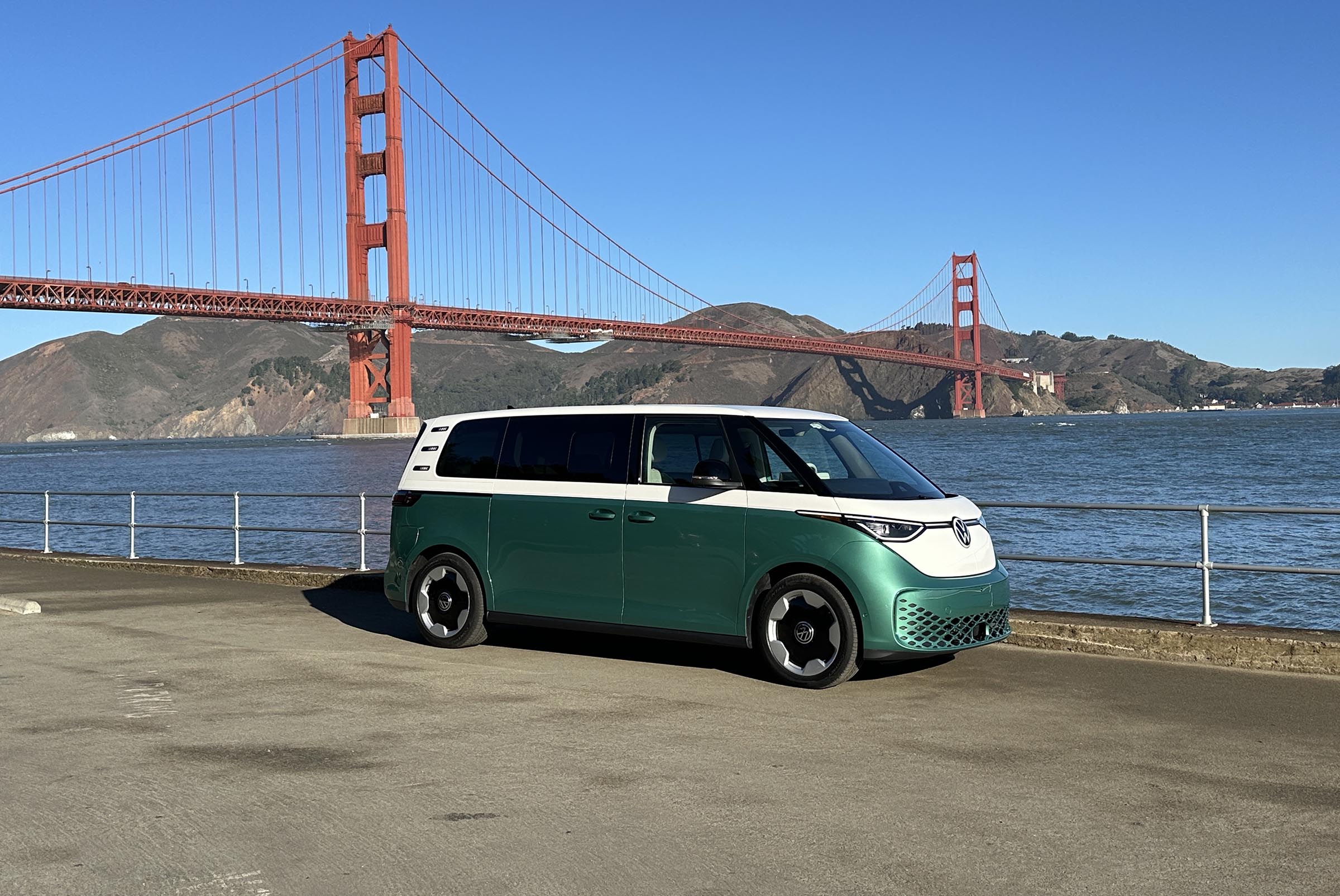
VW temporarily pulled the ID.Buzz out of the U.S. market.
“You know, the corporation is really clear that the path forward is electrified,” Kosowski said, explaining that Kia – and its parent, the Hyundai Motor Group – are approaching EVs with “a global mindset.”
It’s easy for Americans to take a myopic view, focusing only on what’s happening in the States. Currently, EVs make up barely 6% of overall new vehicle sales, down from more than 8% prior to the phase-out of federal tax credits in September 2024. But it’s an entirely different story in much of the rest of the world, Kosowski stressed. EV sales have reached 33% of the huge Chinese market and continue to accelerate, manufacturers reported. For the first nine months of 2025, they neared 22% in the European Union, reaching 31% in September, according to the European Automobile Manufacturers Association. Even in some third-world markets, such as Uruguay, EV demand has exceeded the U.S.
Simply put: Kia can afford to place a big bet on the American market because it can spread costs out. (It also helps that the cost of the underlying powertrain technology is shared with sibling brands Hyundai and Genesis.) The Hyundai Motor Group, as a whole, is more willing to take risks because it “is not as subject to the whims of Wall Street as a lot of competitors are,” suggested Sam Abuelsamid, lead analyst with Telemetry Research. That allows them “to think long-term, rather than quarter-to-quarter.”
Affordability matters
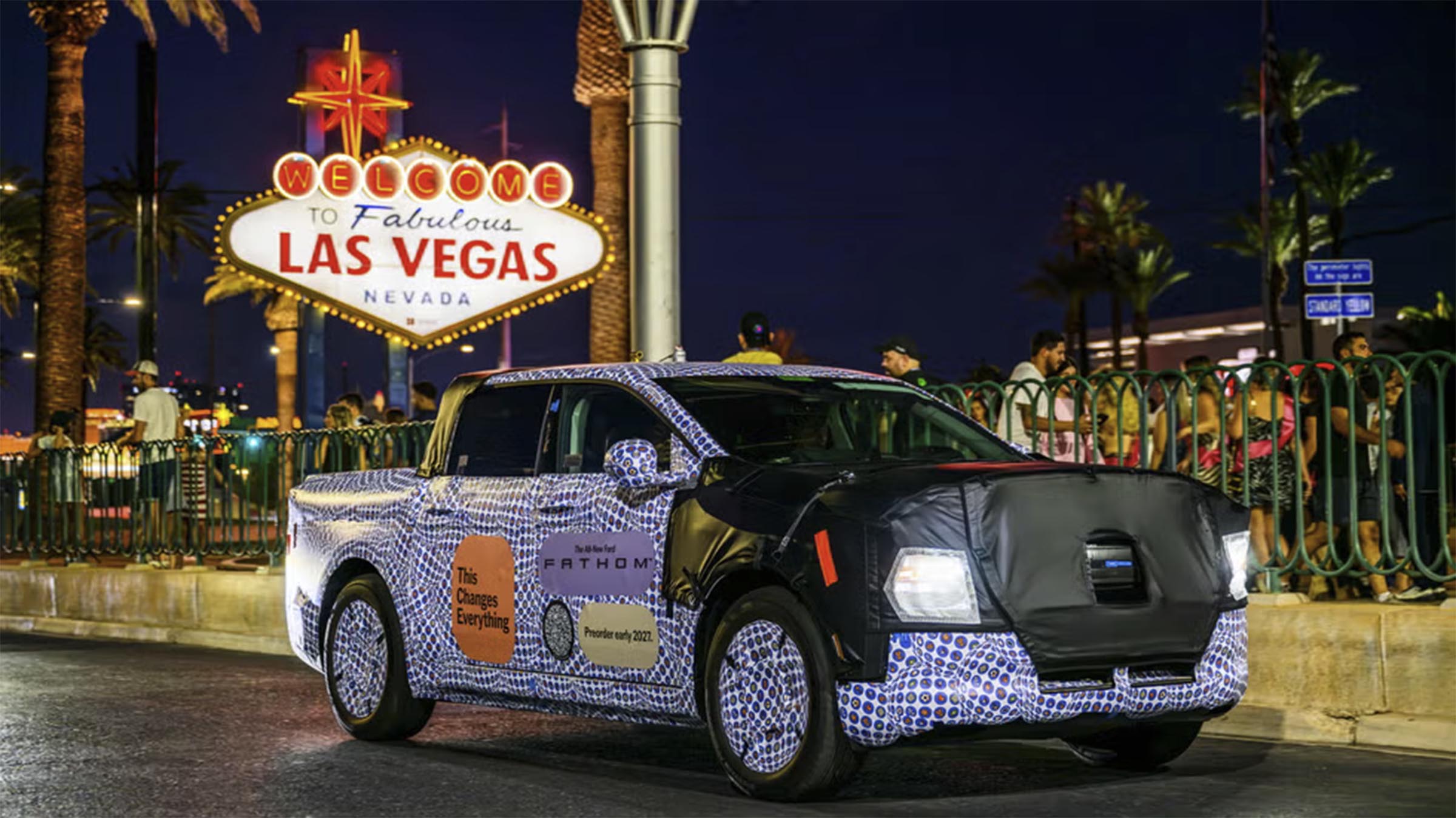
EV3 will be one of a handful of upcoming EVs priced under $30,000 – like this partially camouflaged Ford Fathom pickup.
The EV3 should be a good bet, Abuelsamid believes, because the entry market could help charge up EV demand in the U.S. Currently, the average transaction price for an all-electric vehicle has been running around $55,000, or roughly $5,000 more than for gas models. It’s not precisely an apples-to-apples comparison but EVs aren’t cheap. “You wind up with less than 10% of the car buying populace that can actually accommodate an EV,” noted Kosowski.
When factoring in other concerns, such as range and charging, that leaves even many of those who could afford to go all-electric unwilling to take the plunge. Industry research suggests many buyers could be won over with more affordable products. EV3 starts at $29,980 before factoring in $1,495 in delivery fees. That makes it one of only five all-electric models currently priced below $35,000, though we’ll be seeing more start to arrive during the 2027 model year, including the Ford Fathom and Blank Slate pickups.
These products provide “an opportunity for people to experience their first EVs and that (could) convince a lot of customers that they can fit into their lifestyles,” said Abuelsamid.
More Auto News
- These 29 Models Are Going Away in 2027
- First Drive: Kia EV3 is the Affordable EV We’ve Been Waiting For
- All-Electric Jaguar Type 01 Debuts in NYC
What’s an EV3?
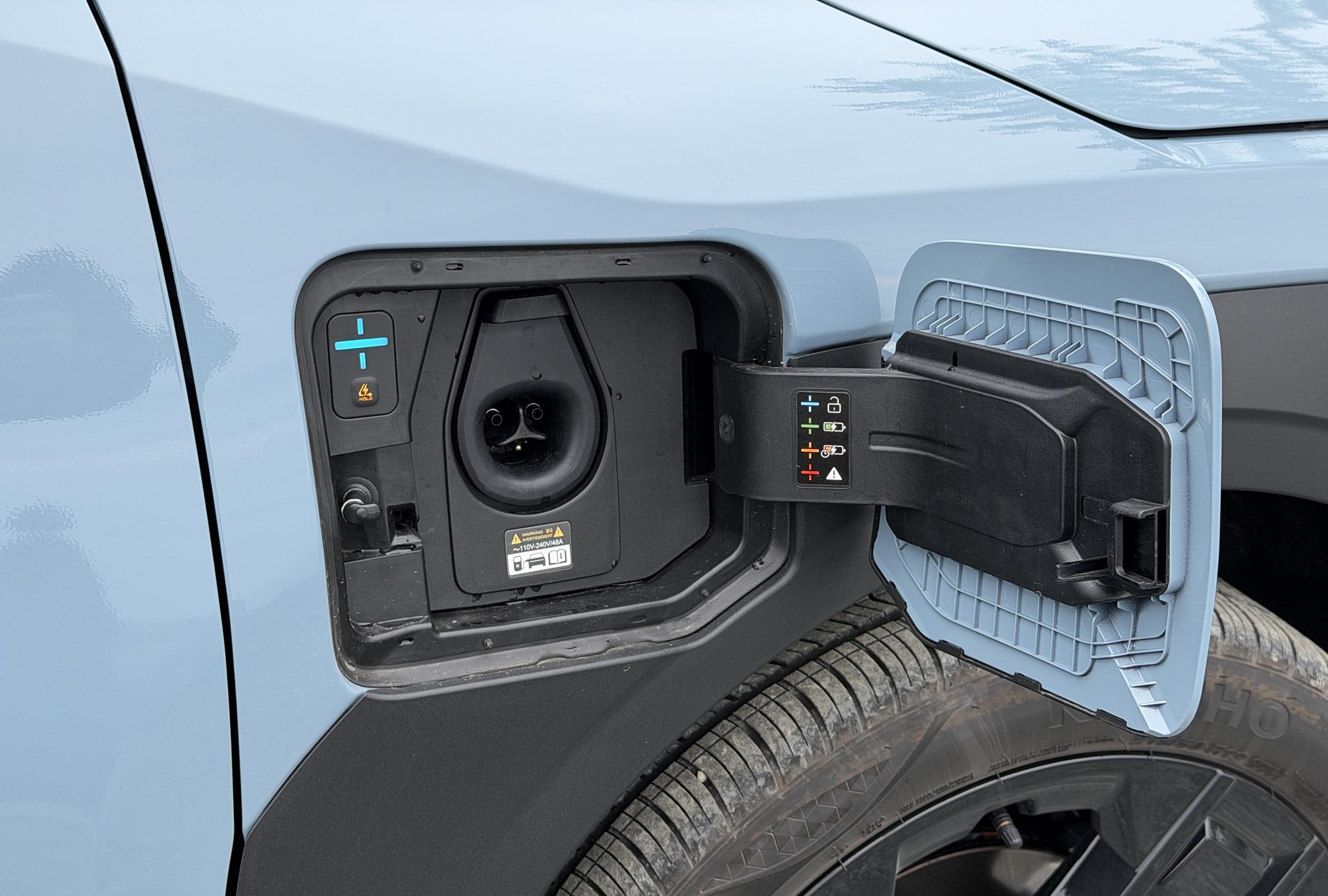
Various versions of the EV3 can deliver up to 321 miles per charge.
While it remains to be seen if U.S. customers will embrace EV3, the little model has developed a strong following in markets such as South Korea and Europe since it first went on sale in 2024. Initial reviews following that media drive on Vancouver Island have certainly been upbeat. In my own review on the website Headlight.News I wrote: “The 2027 Kia EV3 does a good job of addressing some of the biggest complaints potential buyers have about battery-electric vehicles.”
By the time the full EV3 line-up reaches American showrooms buyers will have a variety of different packages to choose from, starting with a front-wheel-drive Wind trim with a modest 58.3-kWh battery delivering an EPA-estimated 221 miles per charge. Models equipped with the larger 81.4-kWh package get up to 321 miles in front-drive models, 280 with all-wheel-drive. There’s also the sporty AWD-only GT-Line model making 261 hp and 284 lb-ft of torque, albeit with a slight trade-off in range.
Since EV3 rides on a unique architecture, meanwhile, it provides a far roomier cabin than one might expect from its subcompact footprint – a surprisingly roomy 99.7 cubic feet of interior space. That includes 26 cf cargo space with the rear seats up, 56.5 cf with them folded over. Add another 0.9 cf with the frunk, the EV3 being the only model in its class with that front trunk.
The big growth opportunity
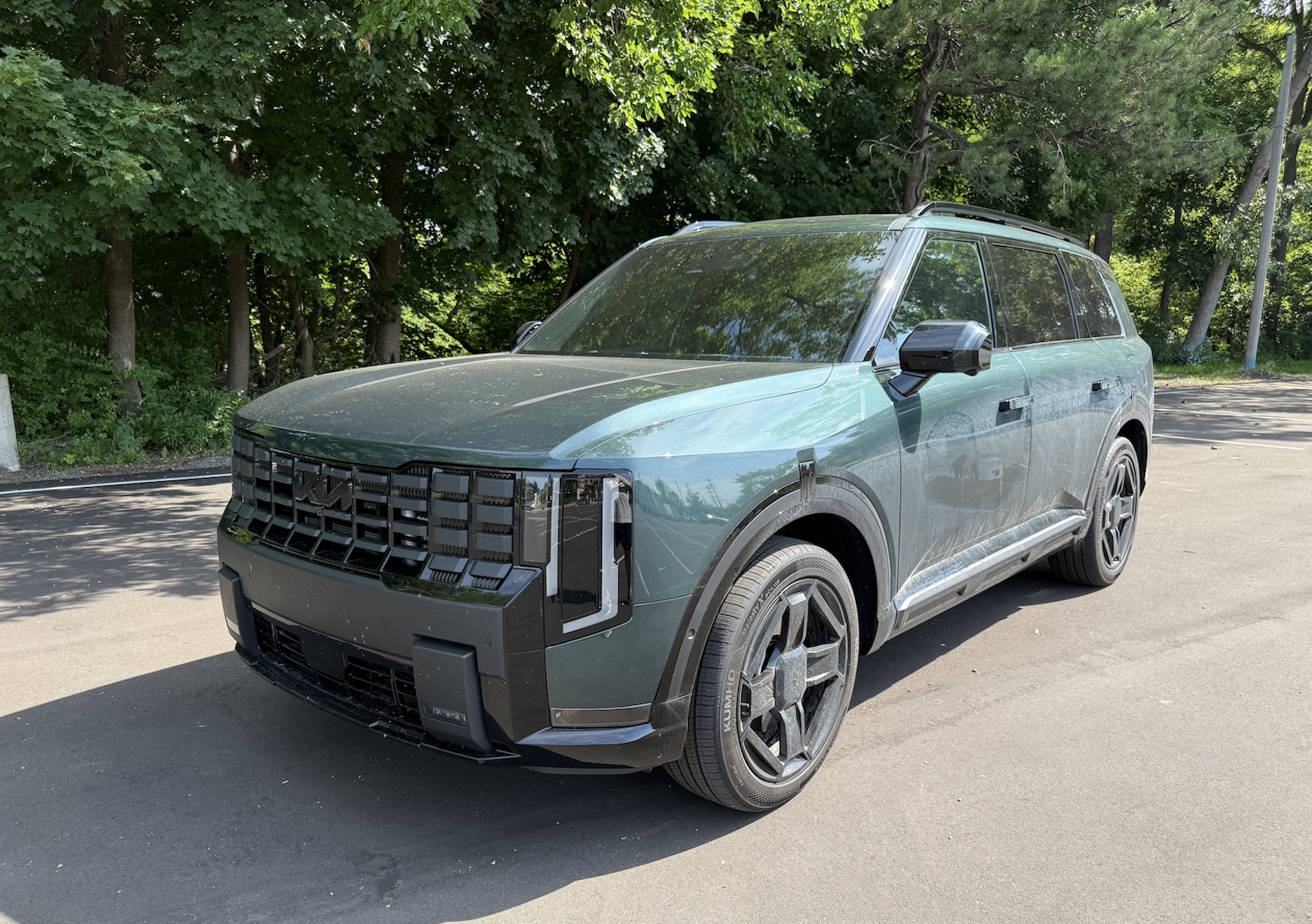
Kia is betting the big growth will come from gas-electric models, like this Telluride Hybrid.
Now, one needs to be careful not to exaggerate the electric crossover’s potential, at least in the U.S., Kosowski is quick to acknowledge. Over the mid to long-term, Kia is betting that Americans will begin to warm back up to all-electric propulsion. But the company doesn’t see anything close to the numbers once projected by the former Biden administration, which was aiming for something close to half of all new vehicle sales by early in the 2030s. Kia’s global CEO Ho-Sung Song, sees a gradual rebound that might only reach 7% by the end of this decade. Getting the market to really take off will require other factors to kick in, including more advanced batteries capable of further lowering costs, boosting range and speeding up the charging process, most experts agree.
That doesn’t mean Americans are completely turned off to electrification, Kosowski said. The market for hybrids has grown almost exponentially, from barely 5% in 2019 to 16% for the first nine months of 2026, according to Cox Automotive. Most experts foresee that reaching 20% in 2027, a figure primarily limited by the number of available models and current production capacity. Kia is handily outpacing the industry overall, conventional and plug-in hybrids generating 31% of its total volume through the end of September, compared to a 5% EV mix, noted the strategic planner.
Expect to see the HEV and PHEV share go even higher in the next several years as Kia adds more hybrid models and increases production capacity. During a visit to the automaker’s West Point, Georgia plant last February to mark the launch of the first Telluride Hybrid, plant Pres. Stuart Countess told me Kia could go to 100% hybrids if the demand were there.
A unique moment

Ships anchor away from Strait of Hormuz. Photo courtesy MoneyControl.com.
Overall, global Kia CEO Song has set a target of a 46% hybrid mix for the company by 2030. That’s a big jump, though Kia will likely still lag its biggest rival, Toyota which is already past the 50% mark with hybrids. In the U.S., only two of the Japanese giant’s models are not currently available with a hybrid powertrain – either as standard gear or an option – and the Supra is being phased out.
As with all-electric models, Kia benefits from its position as part of the Hyundai Motor Group. Both the Hyundai and Genesis brands are heavily investing in electric propulsion. The luxury marque has just launched its first gas-electric model, the Genesis GV80 Hybrid, with more to follow. Hyundai has now introduced an array of its own, from the $25,450 Elantra Hybrid up to the Palisade Hybrid Calligraphy Black Ink, which can push up towards $60,000 fully loaded.
Collectively, the Hyundai Motor Group is betting that electrification – in whatever form – is the way of the future. “My personal feeling,” said Kosowski, “is that what we’re seeing with(the current closure of the Strait of) Hormuz is very much like the 1973 oil embargo that inspired the Corporate Average Fuel Economy standards. There is a consumer moment that’s happened, where the next car people are going to buy is going to be electrified, whether EV, plug-in hybrid or conventional hybrid, or going forward some other electrified technology.”
0 Comments