

Honda will end production of the Prologue, its only remaining battery-electric vehicle offered in the U.S., at the end of the 2026 model year. The move caps a frantic retreat by a company that, not long ago, wanted to become a dominant player in the American EV market. Now it’s shifting focus to a complete line-up of hybrids – and may build a new U.S. plant to produce them. More from Headlight.News.
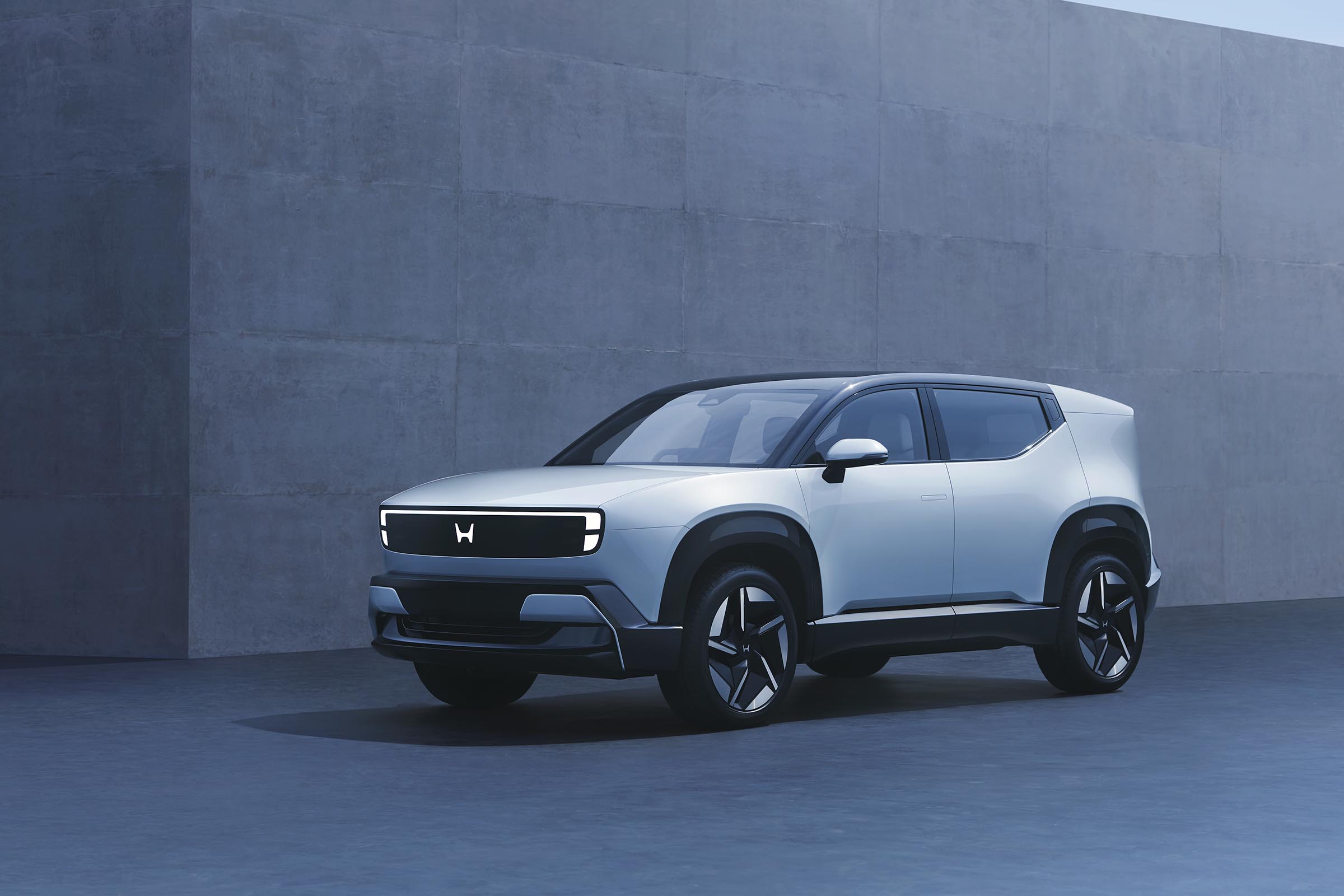
Honda revealed in March it would cancel the 0 Series SUV and sedan due to fading sales in the U.S.
Barely a year ago, Honda was positioning itself as a major participant in what had been the fast-growing U.S. market for battery-electric vehicles. It was a participant in two big joint ventures while preparing to launch its own “battery hub” out of Ohio. All three projects now have collapsed. The second-largest Japanese automaker has told U.S. retailers “to discontinue the Honda Prologue, the last of the EVs it offered in the American market, at the end of the 2026 model year.
While Honda will walk away from EVs – for the U.S. – its doubling down on its broader electrification program, Headlight.News confirmed, with a variety of new gas-electric packages. And, taking the lead from rival Toyota, it will begin offering more products in solely hybrid form, including Accord and Pilot.
To handle the growth it anticipates, Honda is giving serious thought to adding another assembly plant in North America. With its current network of eight North American assembly plants running “almost flat out,” said CEO Toshihiro Mibe,” “If you don’t have a buffer, you can’t recover production,” he explained in an interview with Japanese newspaper Yomiuri Shimbun.
Honda unplugged
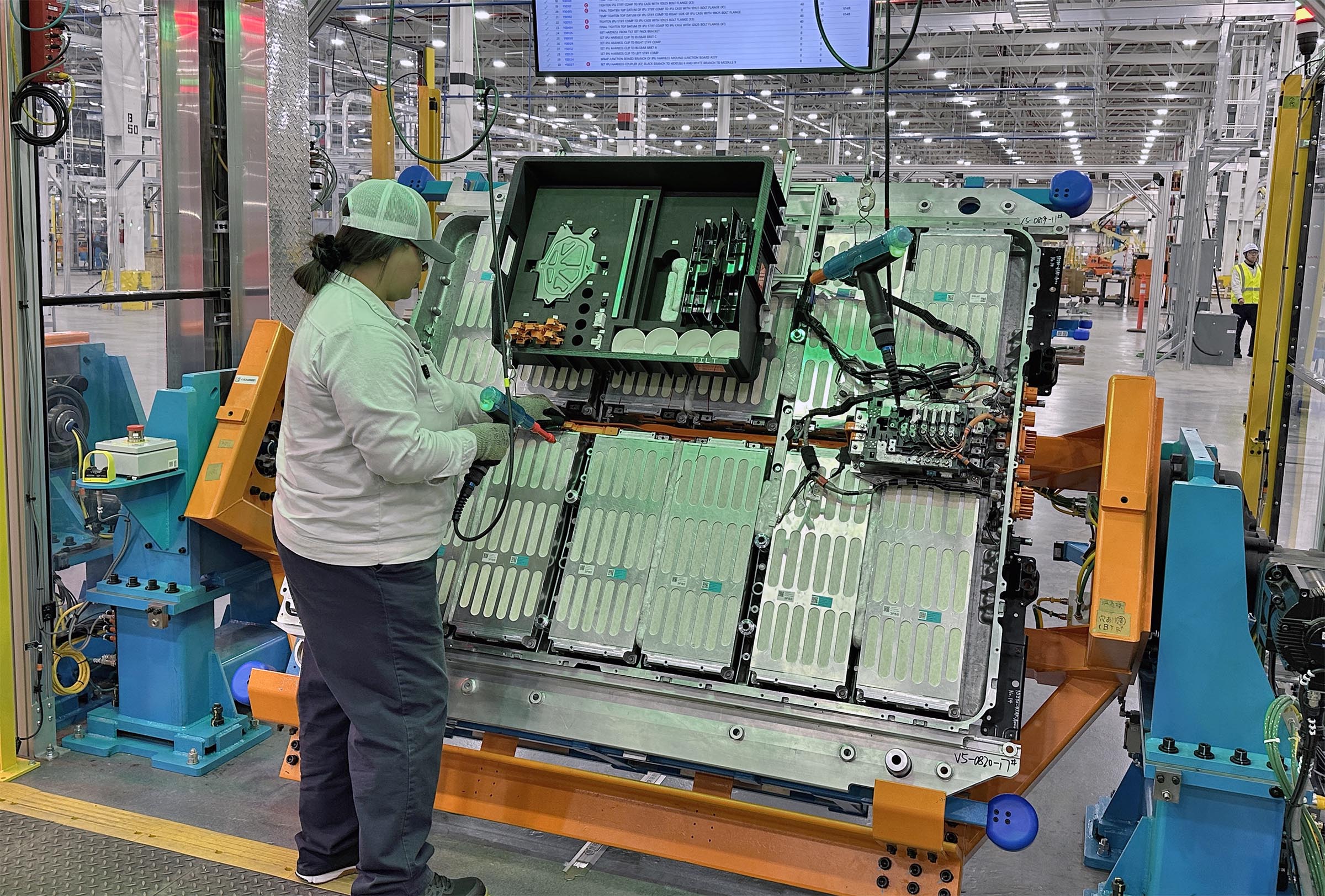
A worker assembles a battery pack for a Honda Prologue at the automaker’s plant in Marysville, Ohio
Honda was set to spend over $1 billion to update its various Ohio facilities, including its original U.S. assembly plant in Marysville, to create an EV “hub.” That covered everything from battery pack production to vehicle assembly.
“We call ourselves an engine plant but we can do anything,” plant leader Michael Tinch told me in a February 2025 interview as the Anna factory prepared to add battery pack production. “Just give us the blueprints.”
But that project came unplugged when, last March, the automaker said it was scrapping plans to build three new battery-electric vehicles in the States, including a sedan based on its 0 Series SUV concept, as well as the planned Acura RSX.
Honda had already killed off another EV, the Acura ZDX, last September.
Failed joint ventures
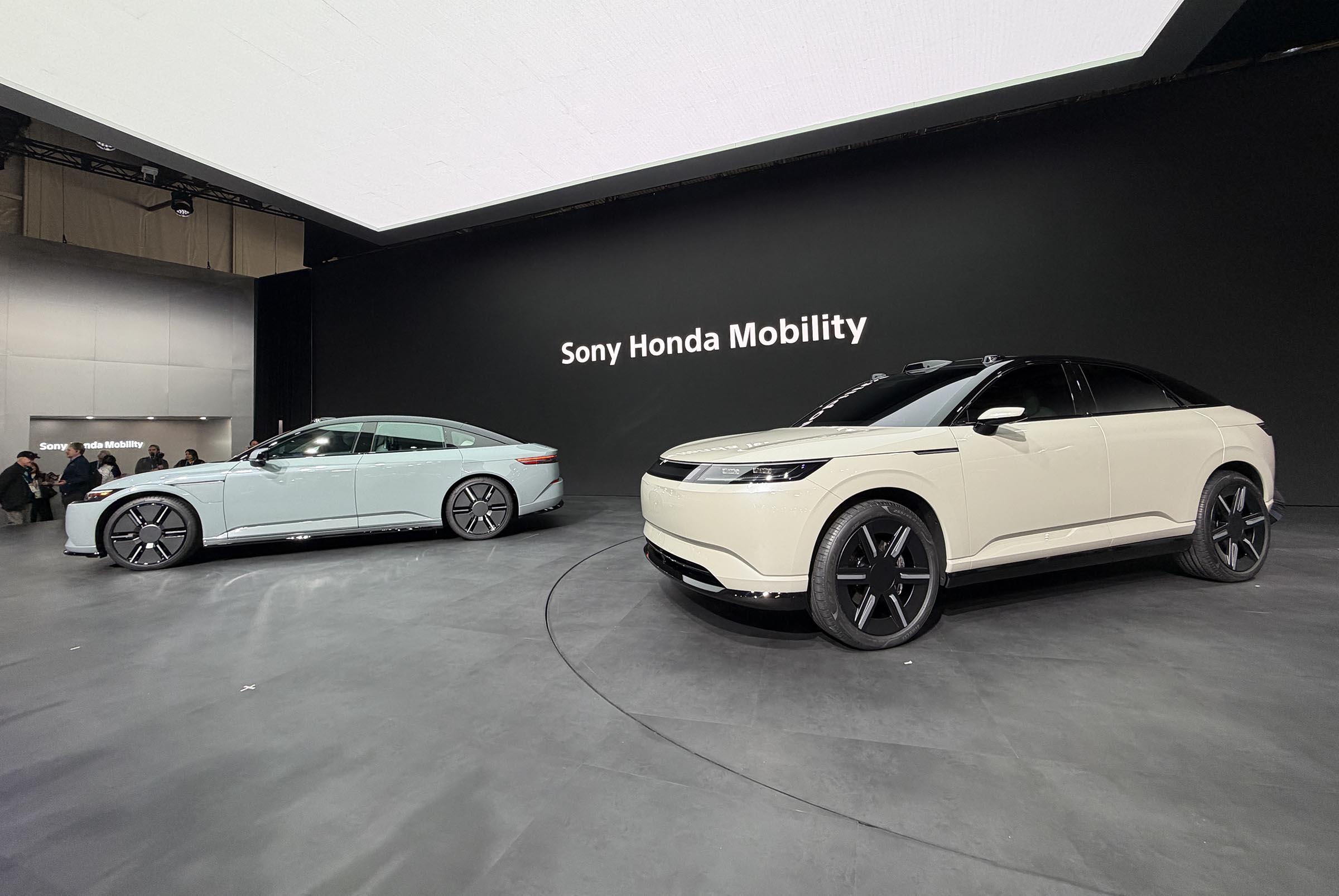
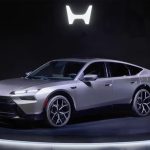
The Afeela prototype and sedan on display during the 2026 Consumer Electronics Show.
ZDX was the product of a joint venture with General Motors – as is Honda Prologue – the U.S. automaker producing those two models alongside the Chevrolet Blazer EV at an assembly plant in Ramos Arizpe, Mexico. All three used a version of GM’s Ultium platform. Sales have fallen well short of expectations. ZDX, for example, racked up only about 20,000 orders during its year on the market. With Honda no longer taking EVs out of the Mexican plant GM has been forced to trim production – but there’s no indication it will end the Blazer EV’s run.
Only weeks after scrapping plans for the Ohio EV Hub, Honda announced – to little surprise – that it was also scuttling another joint venture.
More precisely, the partnership known as Sony Honda Mobility said it had come to the conclusion there was no “viable path forward” for the planned Afeela brand. Almost from the start there had been questions about the potential appeal of the $90,000 high-tech battery-sedan they were working on. In January, SHM previewed an SUV version of the EV at the Consumer Electronics Show in Las Vegas. But company officials couldn’t see that added model penciling in a profitable future.
“The era of EVs in the United States will not come in five years,” CEO Mibe said in his July 18 interview, defending the decision to scrap U.S. EV plans. That move resulted in a $15.8 billion write-off for the fiscal year ending March 31 – and the first full-year loss by the automaker since it went public on the Tokyo Stock Exchange in 1957.
Shifting focus
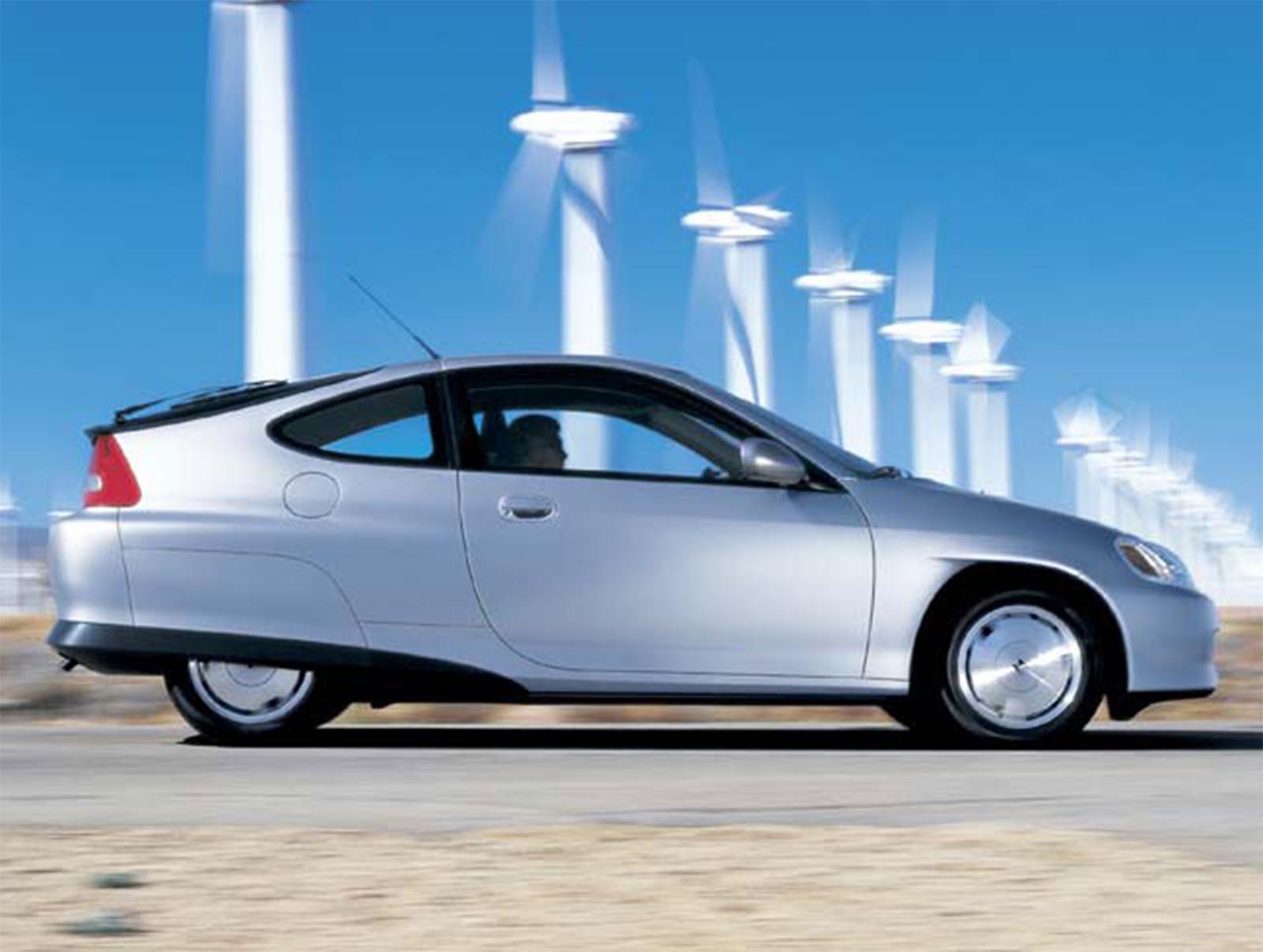
The original, 2000 model year Honda Insight.
Honda is by no means abandoning battery power. It’s simply shifting focus, putting more of its engineering and manufacturing expertise on hybrids, noted Sam Fiorani, lead analyst with AutoForecast Solutions.
Looking forward, Fiorani said he sees, “No plan for production of an EV this decade in North America.” On the other hand, “They have a lot of hybrids coming forward. Some models will be fully hybrid before the end of the decade, including Accord and Pilot and it looks like the CR-V will drop (all of its) non-hybrid powertrains.”
Honda already has one hybrid-only package, the sporty Prelude coupe relaunched for 2026. The expansion of that strategy will put it more in line with what Toyota has doing – though, ironically, the Japanese giant has actually begun a rapid expansion of its EV line-up this year. That includes models like the Toyota bZ Upland and Highlander EV, as well as the Lexus ES which is offered with a variety of different powertrain options.
Not your father’s hybrid
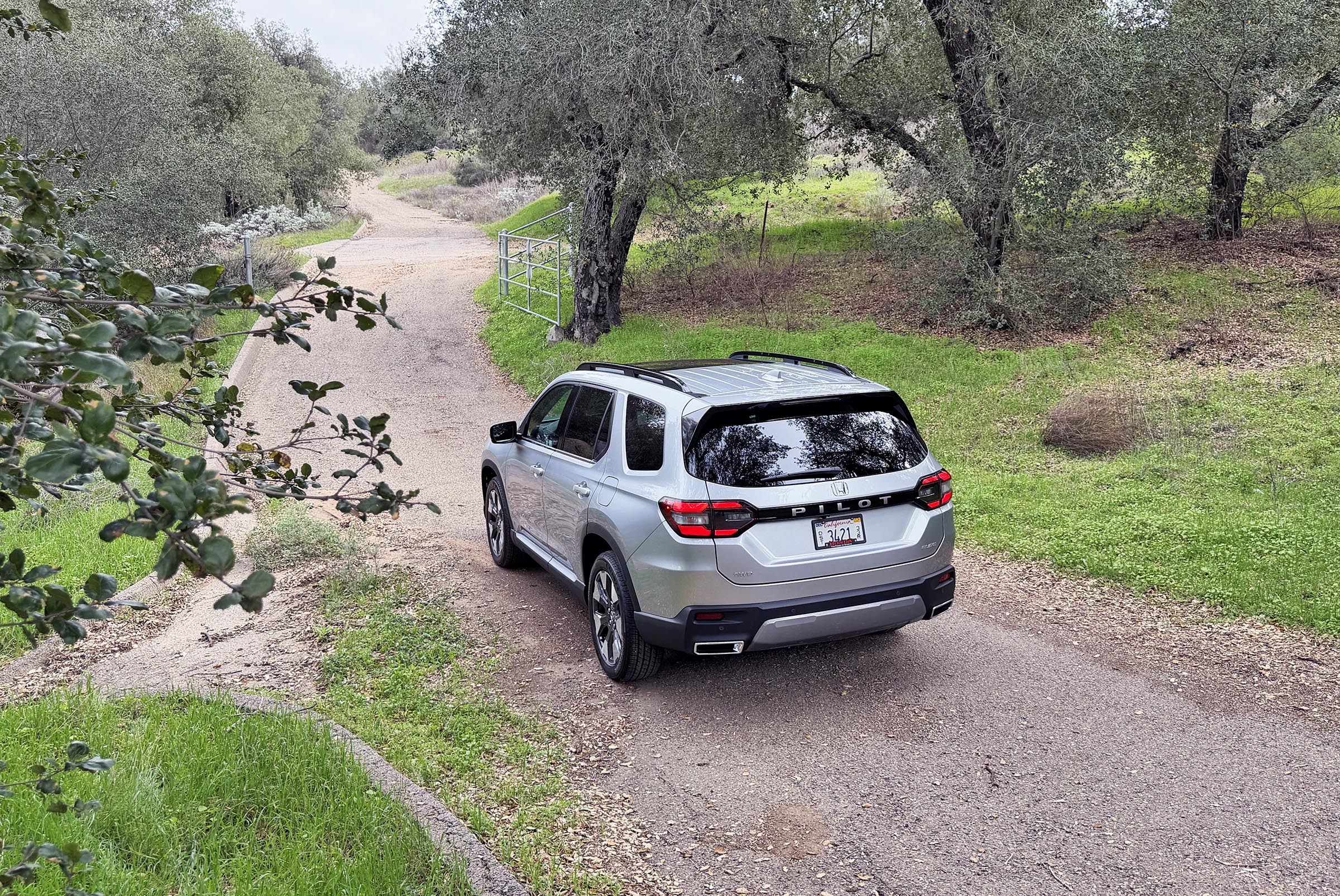
Look for the next-generation Honda Pilot to be hybrid only.
Honda was the first automaker to offer a hybrid in the U.S., the original Insight debuting in December 1999 as a 2000 model. (It launched a few months ahead of the original American version of Toyota’s Prius.) Insight and other early Honda models put a premium on energy efficiency at the expense of performance.
More recent hybrid packages, like Prelude, have shifted the formula, striking a more aggressive balance of power and mileage. “That’s the way the market is moving,” said Fiorani, “and they’re moving in the same direction.”
What’s less certain is whether Honda will also revive production of plug-in hybrids. It abandoned that small niche segment in 2025 with the discontinuation of the CR-V PHEV. Also unclear is whether Honda will add an extended-range electric-vehicle, or EREV, a new approach brands including Jeep, Ram, Scout, Hyundai, Ford and others are planning to offer.
Expanding production

Honda CEO Toshihiro Mibe.
Today, hybrids account for 25% of Honda’s U.S. sales. That’s almost twice the industry average – though far less than the roughly 35% share of sales hybrids make up at Toyota.
Honda wants to close that gap and, in the process, substantially boost its overall U.S. sales and market share. But, as Mibe noted in his interview, it will be difficult to do so considering its current North American production capacity – as well as the Trump administrations tariffs and trade restrictions.
“I want to increase the number of sales in North America a lot,” Mibe told the Japanese paper. So, to get there, “The basic idea is to produce in a place where there is demand.”
Honda officials will only say they are “exploring” opportunities for a new plant – and where exactly such a factory might be built is one question to resolve. Part of the problem is figuring out how to deal with Trump trade strategies, including its decision to not extend the U.S. trade agreement with Mexico and Canada. That’s where several Honda plants are currently located. This might force Honda’s hand, leading it to build in the States, several sources said on background.
It wouldn’t be alone. Several foreign-owned manufacturers, including Toyota and the Hyundai Motor Group, are boosting their own U.S. production capacity, whether with new plants, expansions of existing facilities – or both.
This story first appeared on TheCarCollective.Substack.com. Paul A. Eisenstein is one of the founding members of that group of leading automotive journalists. To subscribe to the Collective, Click Here.


0 Comments