
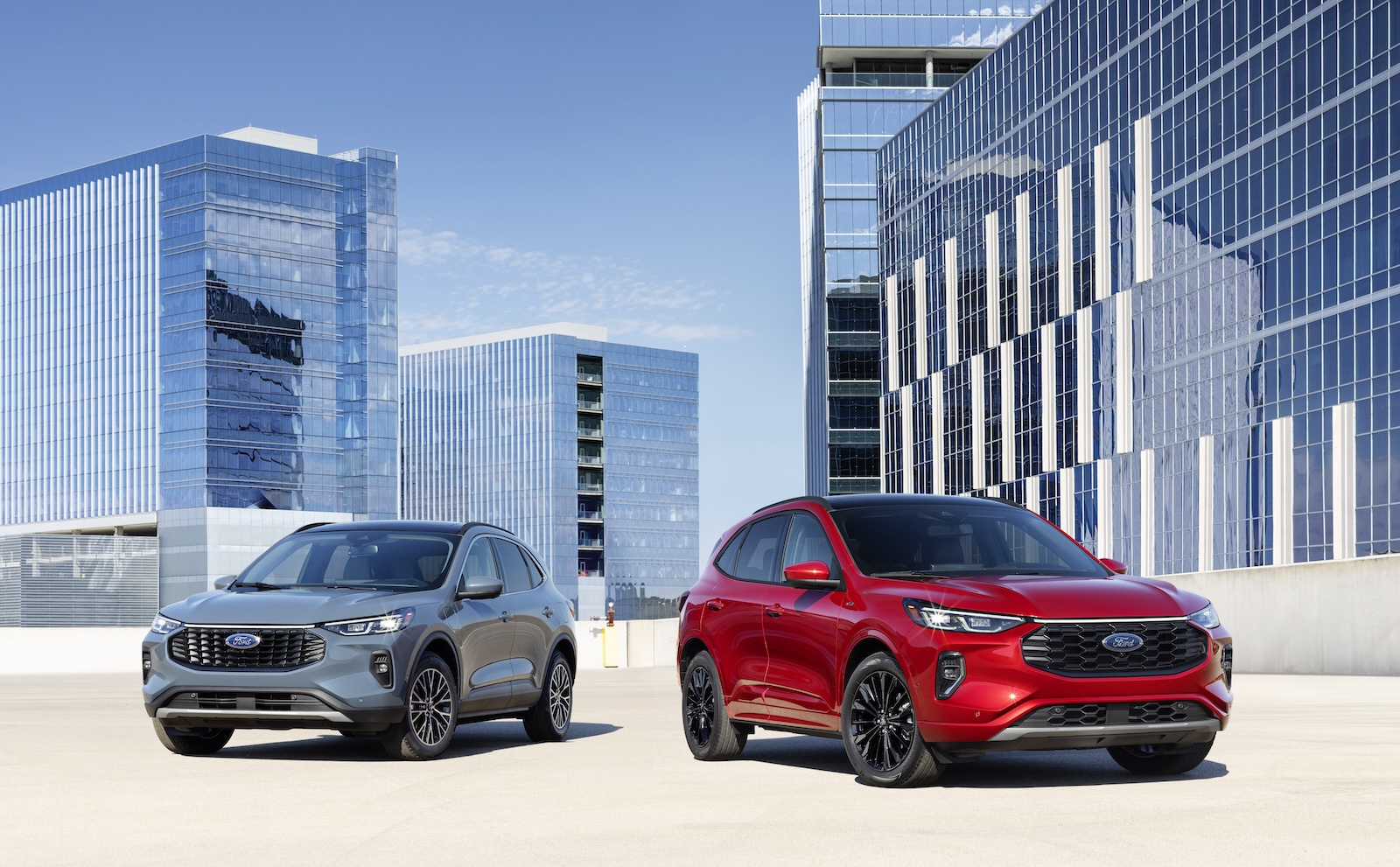
Ford’s decision to kill off the Escape crossover last December took many folks by surprise. But it now looks like that long-popular badge will make a return in 2029 – albeit on a new EV based on Ford’s Universal Vehicle platform. More from Headlight.News.

Ford had hoped to move returning Escape buyers over to the Bronco Sport, Explorer or Maverick.
When Ford decided to scrap the long-running Escape crossover it was betting on dealers shifting customers upmarket to the bigger Explorer or to move them into either the more profitable Bronco Sport or the Maverick pickups.
Things haven’t worked out quite as planned, many traditionally loyal Ford buyers shifting to competitive alternative like the Toyota RAV4 and Honda CR-V. That’s a key reason why the Detroit automaker’s sales tumbled about 8.5% for the first nine months of the year.
Now, it seems, Ford is looking to bring back the Escape, though it will take a couple years to fill the gap – and the replacement will go all-electric. A next-generation Ford Escape is expected to be the second product line based off the automaker’s new Universal Electric Vehicle platform when it goes into production during the second quarter of 2029.
Following Fathom
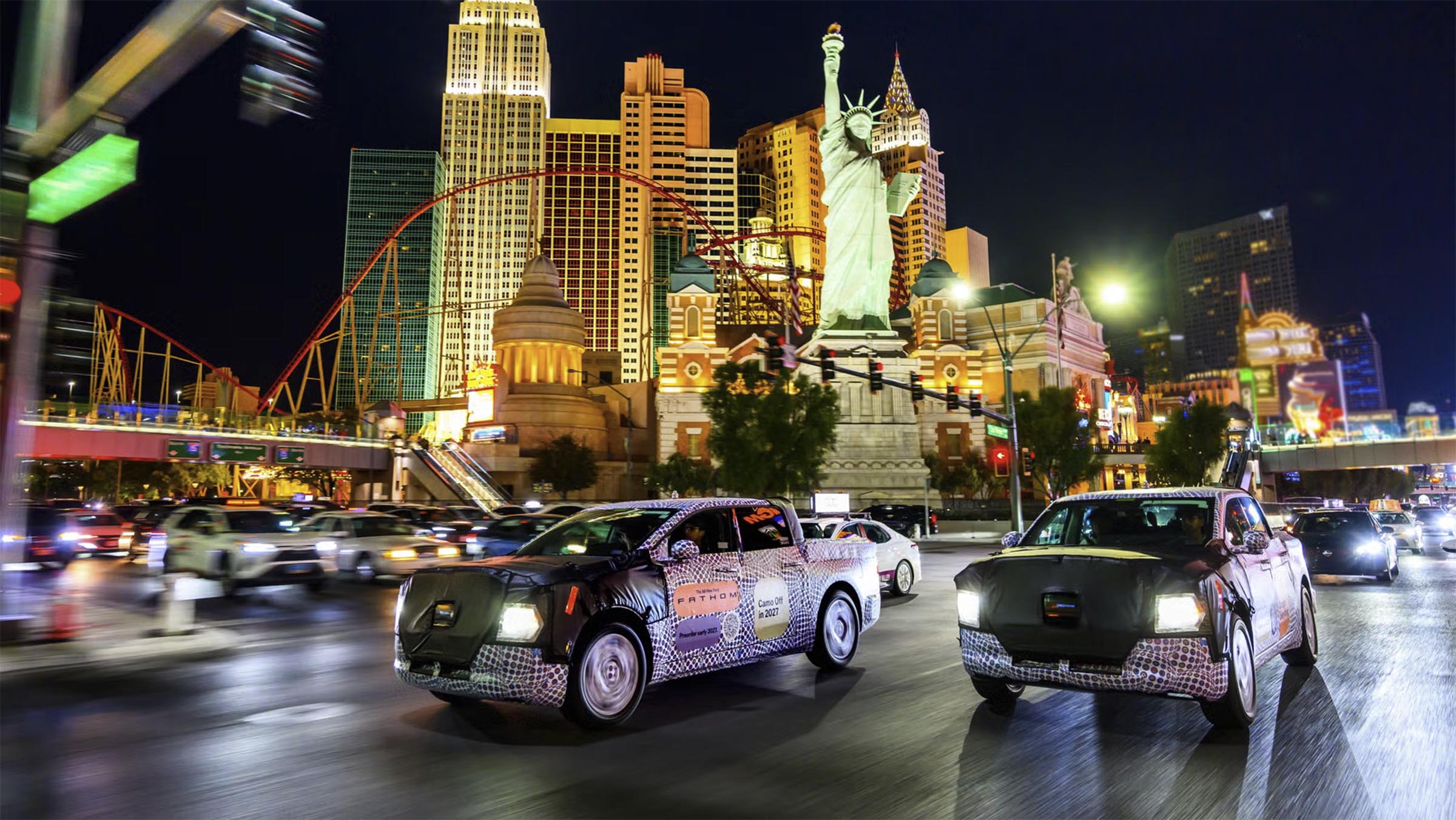
Fathom will offer standard and long-range battery pack options.
Production of the gas-powered Ford Escape ended last December at the automaker’s big assembly plant in Louisville, Kentucky. Since then, Ford has invested several billion dollars to convert the factory for production of the Universal EV platform. It’s a radically different, modular design that, Ford officials claim, will yield significant improvements in range, charging – and cost – compared to the company’s earlier battery-electric vehicles.
The first product based on the platform is the Ford Fathom which will go into production next year. The changes to the Louisville plant will see portions of each Universal EV produced on three adjacent lines, with final assembly uniting them much like a sandwich. The approach is expected to lower production costs by about 20% and deliver substantially greater flexibility.
The platform has been developed through a skunkworks team based in Long Beach, California and, Ford insiders have noted, it is flexible enough to allow for as many as eight different body styles. The second model is expected to be a replacement for Escape – though the name might be changed by the time production begins about 30 months from now, cautioned Sam Fiorani, vice president and chief analyst for AutoForecast Solutions.
A common platform
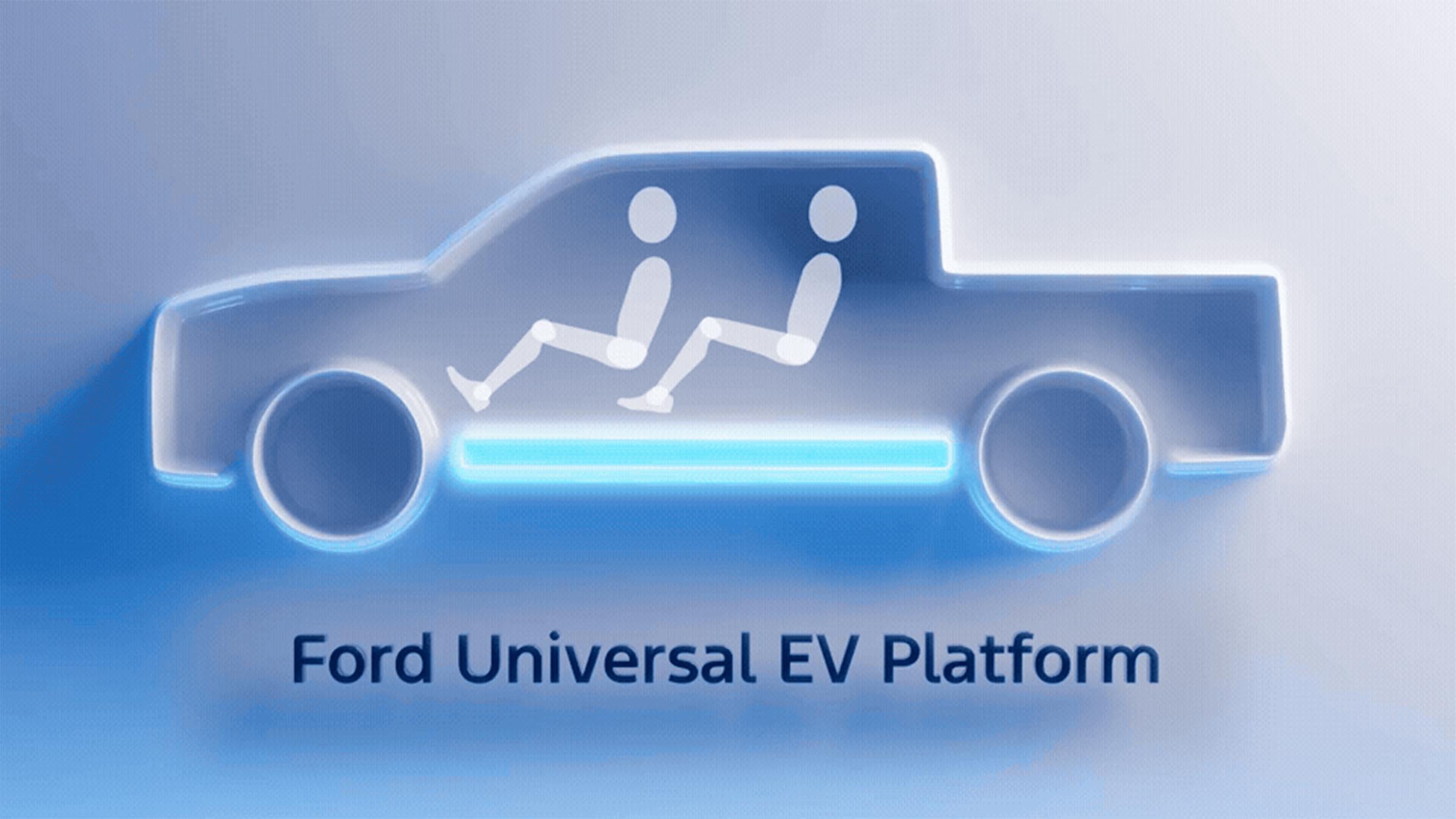
Ford Universal EV Platform will debut in the form of a compact pickup.
Ford offered Headlight.News a deep look inside the Universal EV program earlier this year. Project officials noted they will start out using LFP, or lihium-iron phosphate – batteries that are notably less expensive than the lithium-ion cells that dominate the EV market today. While LFP batteries can’t store as much power on a pound-for-pound basis, Ford engineers have developed ways to pack the cells more tightly together. And, while they aren’t releasing final numbers, that should yield as much as 300 miles per charge in Fathom, though Ford is expected to offer a choice of different battery pack sizes on some Universal EV products.
A more optimized platform, cheaper batteries and improved manufacturing methods will allow Ford to launch an entry version of Fathom at $28,350 — plus $1,595 in delivery fees – undercutting virtually every EV now on the market.
“The potential is there (to win over) young buyers who are looking for entry level products and who are more willing to embrace EVs” than older motorists, said Fiorani.
More Auto News
- These 29 Models Are Going Away in 2027
- A Week With the Mazda CX-9- Premium Sport
- First Drive: Kia EV3 is the Affordable EV We’ve Been Waiting For
New Lincoln Corsair in the works

Last fully updated in 2023, the Lincoln Corsair will see a temporary replacement brought in from China.
The Universal EV team is busy working up a number of subsequent products. That’s expected to include a new version of the Lincoln Corsair which was also abandoned by Ford when it shut down the Louisville plant last December.
Currently, Lincoln dealers are working through the last Corsair models in inventory, waiting until the automaker begins importing a Chinese-made version in 2027. Where the old model was offered with a choice of gas or plug-in hybrid drivetrains, the new Corsair will be a conventional hybrid, Headlight.News has learned.
That import does saddle Ford with fairly hefty tariffs on Chinese auto imports but the automaker doesn’t have any real alternative for luxury buyers, unlike the options it can offer returning Escape buyers. But Ford sees the imported Corsair as a temporary fix, a longer-term solution also coming out of the Louisville plant in the form of a third all-electric crossover.
What else will follow is uncertain, though Ford is known to be working up a three-row EV using the new technology. The big question is whether the Universal project will be able to win over EV-skeptical American buyers.


0 Comments