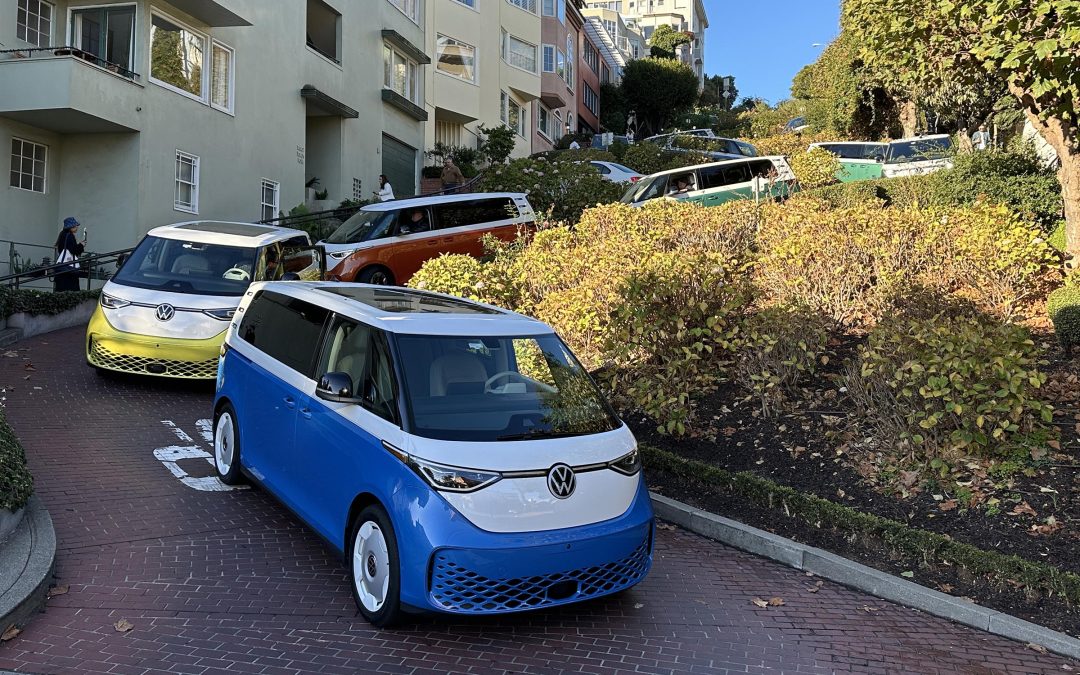
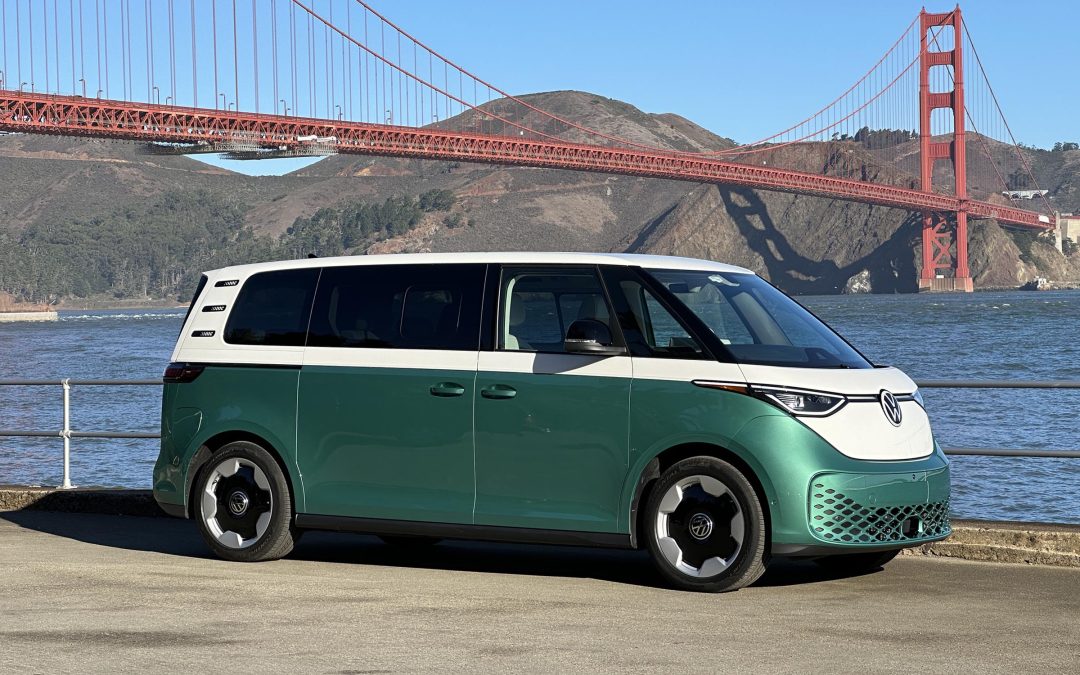
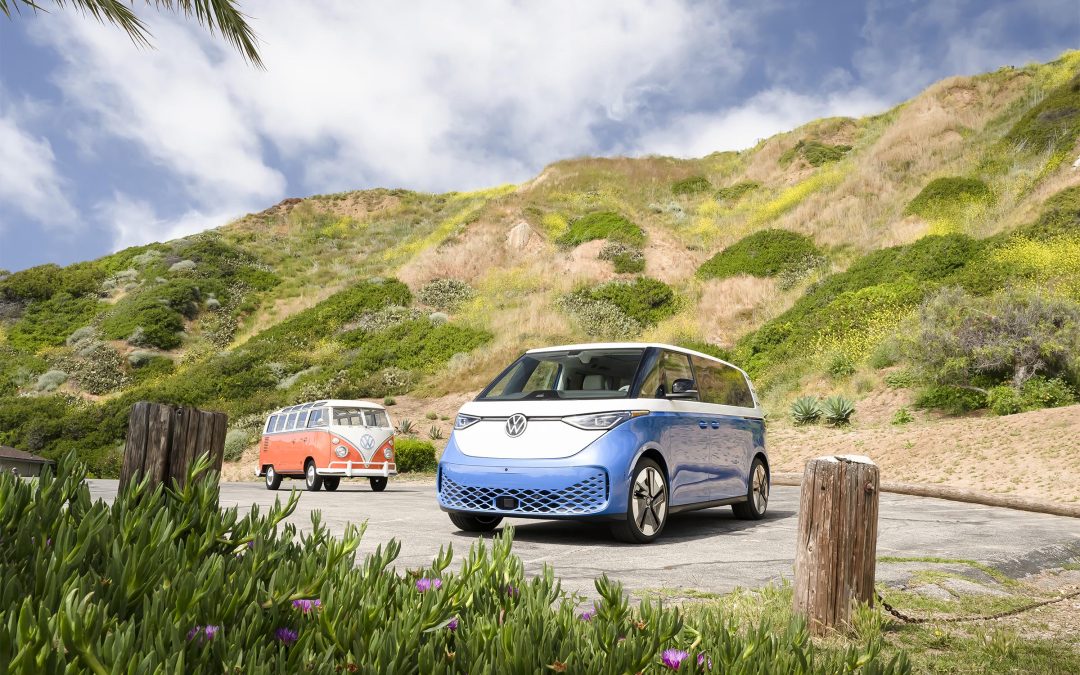
Volkswagen has decided not to offer the 2026 ID.Buzz microbus in the U.S., citing weak “market conditions” for the unexpected move. But it says it is “excited” about bringing back the all-electric van in 2027. Headlight.News has more.
There was plenty of, well, “buzz” when Volkswagen officially launched sales of the ID.Buzz battery-electric van last year, bringing out a modern incarnation of its legendary microbus. But that hasn’t translated into robust demand, VW selling barely 400 Buzz models a month so far this year. A temporary stop-sale didn’t help, but there are other problems that may be short-circuiting demand for the EV. Headlight.News has more.
It’s been a decade’s long wait but Volkswagen is finally ready to bring the replacement for its iconic Microbus back to the U.S. market. And while the original might have been an affordable people-mover, buyers of the new VW ID.Buzz will have to reach deeper into their pockets, the all-electric model starting at $61,545.
Volkswagen “remains committed” to its aggressive EV program, the automaker’s U.S. chief executive said. But, as sales growth slows, the German auto giant is also considering adding hybrids and plug-in hybrids to its American fleet. And it’s not alone. Other manufacturers who’ve made major commitments to EVs, such as Kia, are also turning to hybrids to help them meet emissions targets because of consumer resistance to all-electric vehicles.