
This story first appeared in The Car Collective. It features daily columns by some of the world’s best-known automotive journalists. You can read more – and subscribe – at TheCarCollective.substack.com.
It’s been nearly 30 years since I took my first trip to the People’s Republic of China. I’d been invited to check out the Buick plant newly opened in the Pudon district of Shanghai. Back then, cars were a relative rarity on Chinese roads. But that factory, which rose out of a former rice paddy, helped kick off a transportation transformation.
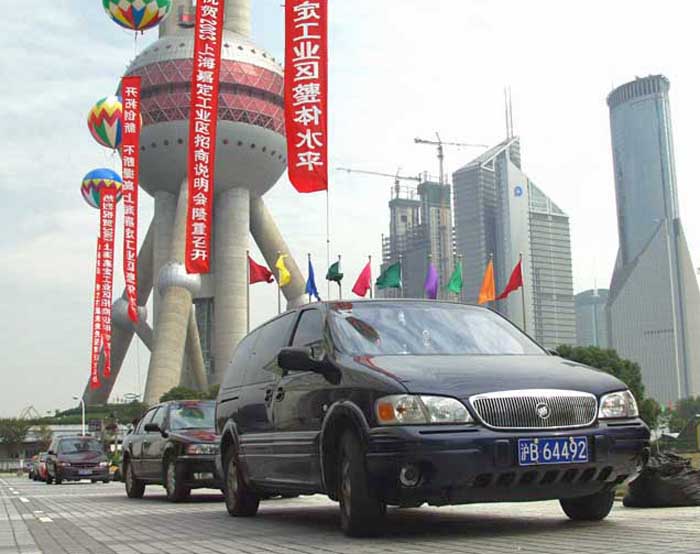
A Buick drives through Shanghai.
In 2025, sales topped an all-time record 34.4 million vehicles, a 9% year-over-year increase, and more than twice the 16.2 million vehicles sold in the U.S. last year.
The success of that project encouraged a flood of foreign investment; today, virtually every major global automaker has a manufacturing base in the PRC. And, until recently, those operations were a license to print money. For most of the past three decades, China was the largest market for automakers like General Motors and Volkswagen in terms of both unit sales and revenues. But the situation has changed dramatically over the past several years.
Take Audi, the luxury arm of the Volkswagen Group this week sharply lowering its full-year revenue and operating margins forecast largely due to a 19% drop in deliveries in the Chinese market. And it isn’t alone. In December 2024 General Motors announced it would take a $5 billion hit as it restructured its Chinese operations. From a 2017 peak of 4 million sales, the company saw volumes fall to just 2 million.
The rise of the domestics
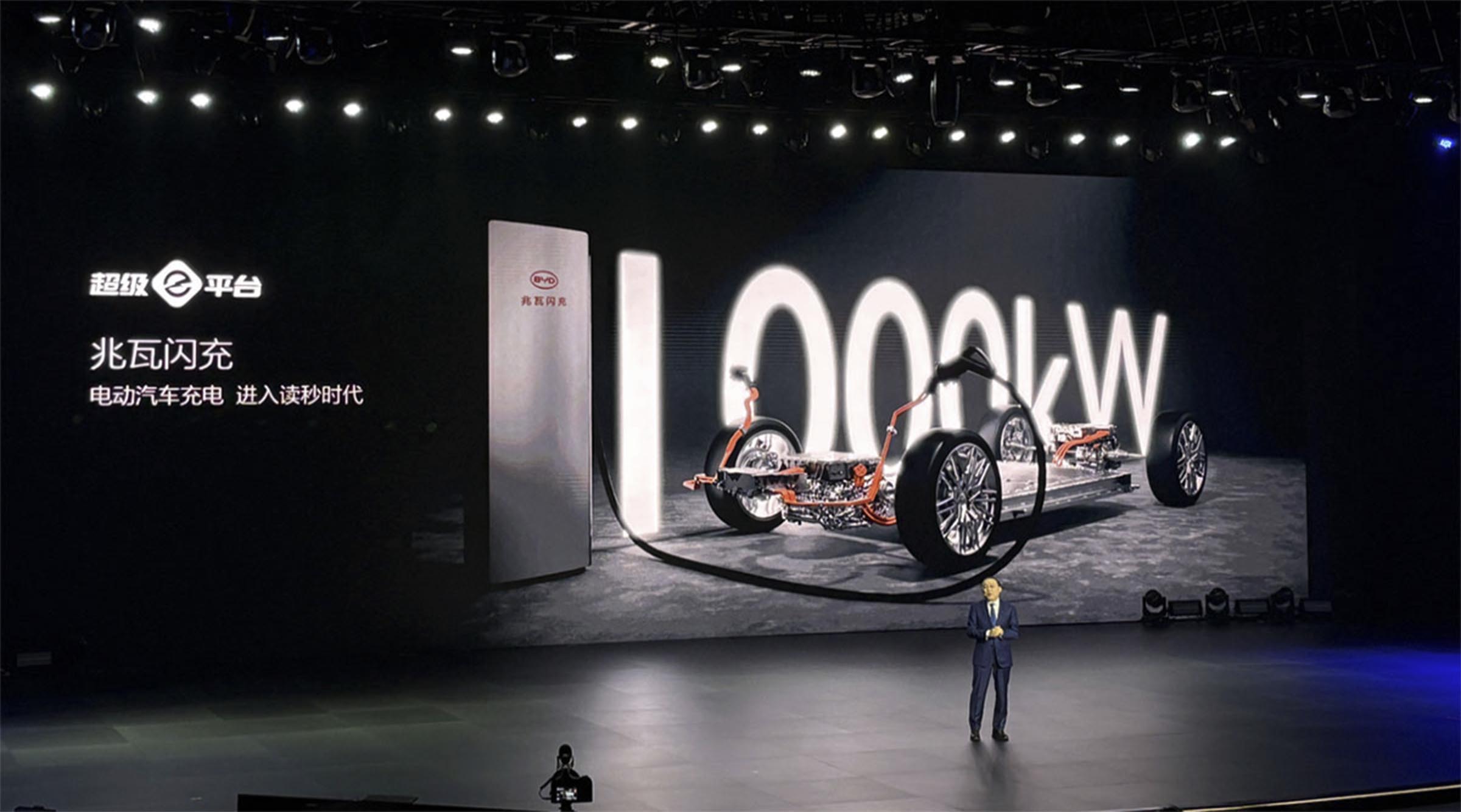
BYD officials reveal the new Megawatt charging system rolling out in China.
Pretty much everywhere you look in China, the story is the same. And the explanation is simple. The foreign-owned brands that had once dominated the huge market are rapidly losing ground to homegrown Chinese manufacturers such as BYD – the domestic leader with sales of 3.5 million vehicles last year – followed by Chery, Geely, Galaxy and Chang’an. From insignificant players, the domestic brands are expected to capture a 68 to 69% share of Chinese auto sales in 2026, according to the latest Automobility State of China’s Auto Market report.
How did they pull off such a rapid revolution? One only needed to attend the Beijing Motor Show in April to get a good sense of what’s happening in the Chinese market. Everywhere you turned at the China International Exhibition Center you were greeted with new products. Indeed, there were so many models on display the event spilled over into the neighboring Capital International Exhibition Center.
For the first half of this year, according to Dongchedi, an automotive media platform, fully 650 new and refreshed vehicles were introduced in China during just the first half of 2026. A report by Bloomberg estimated that the rollout rate is currently running at an average four per day. The vast majority of these are coming from those domestic brands, rather than foreign-owned manufacturers. In hotly competitive China, the domestics are flooding the market with as many products as possible, hoping not to leave open any gaps that competitors can take advantage of. “We don’t see a fraction of the growth here” in the number of new models, Sam Fiorani, lead analyst with AutoForecast Solutions, told me.
Philosophical differences
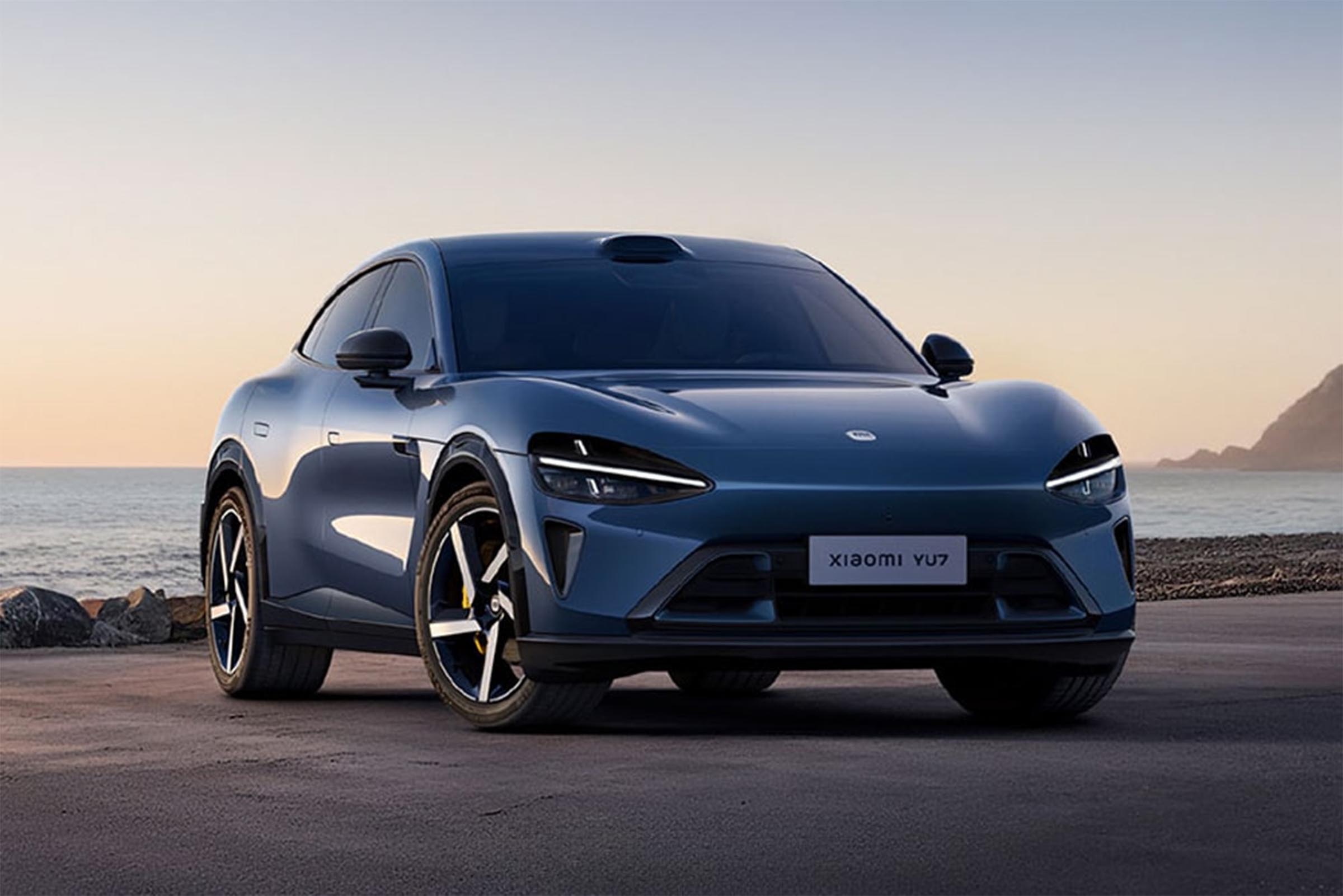
The Xiaomi YU7. There are more than 100 different domestic Chinese brands.
This reflects a fundamental difference in philosophy, he added. In the U.S. and Europe, Western automakers tend to take their time between model changes. They attempt to strike a balance that allows them to achieve economies of scale by keeping vehicles in production as long as possible before volumes start to slip. Not so the Chinese, said Fiorani. They’re willing to risk putting out products that might have extremely short lifecycles. “Many of them wind up disappearing” in relatively short order, he said.
Further complicating matters is the raw number of Chinese automotive manufacturers, well over 100, according to Dunne Insights, a consulting firm that closely follows the Asian market. And more, he noted, seem to pop up all the time. That reflects the unusual approach to capitalism in the PRC. Most automakers have at least some sort of tie-up to local or regional Chinese government agencies, even to the military, where jobs are considered more of a priority than profits, Dunne explained.
That doesn’t mean they’re ensured success. Plenty of smaller marques have vanished in recent years. And the incredibly cutthroat nature of the Chinese auto industry is hammering even some of the country’s biggest brands – as well as foreign manufacturers like GM and VW.
A “brutal year”
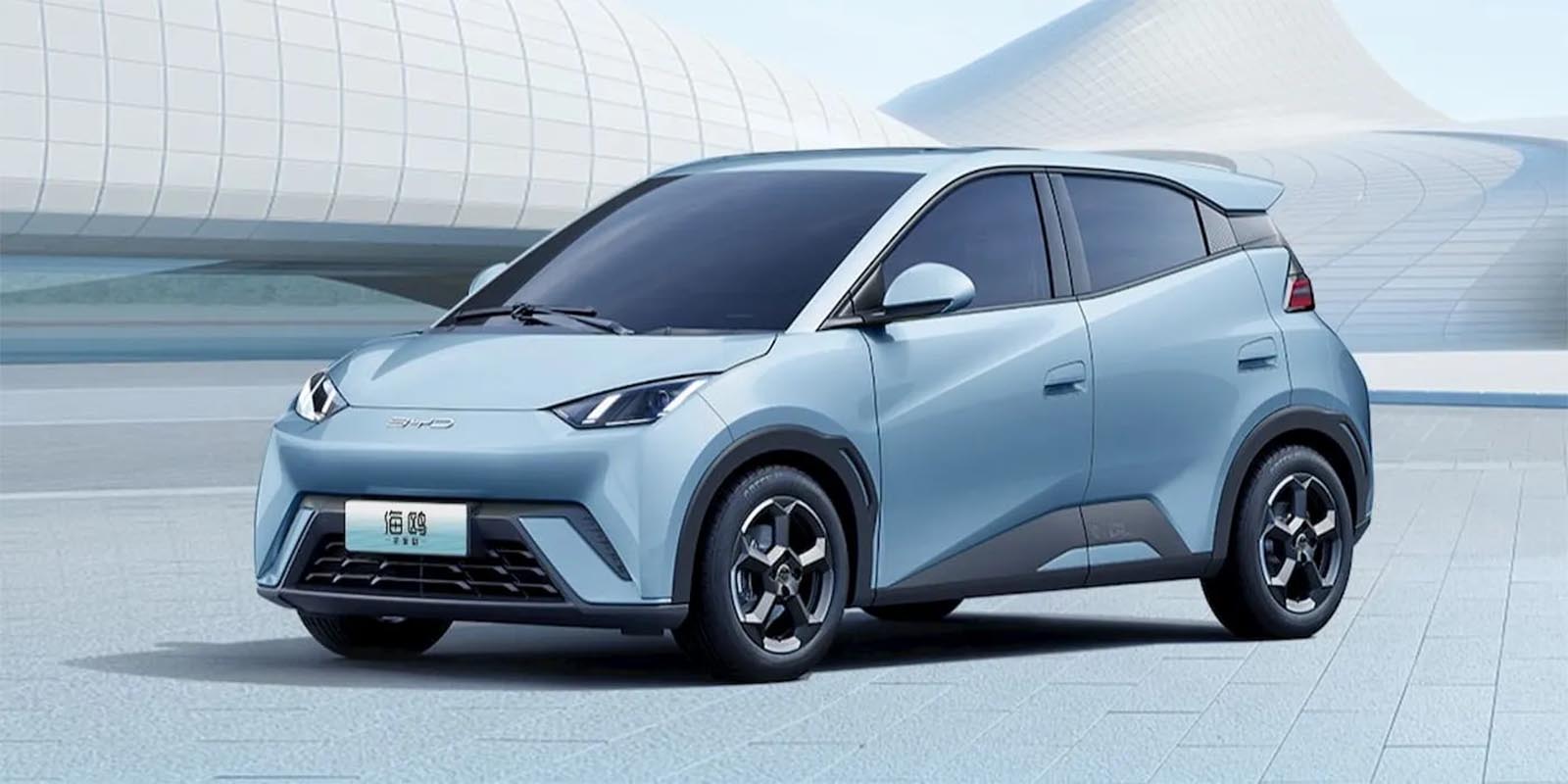
The new BYD Seagull starts as low as $9,700 in China.
Price wars and over-production are creating major headaches. According to industry data, the price of the typical new vehicle sold in China fell about 11% between 2023 and 2025, from 217,000 to 194,000 yuan – about US$30,000 to $27,000. Making matters worse, sales suffered their worst decline since the automotive era began in China during the first half of 2026. Volumes were down 20.2%, reported the China Passenger Car Association. It expects the decline to come in around 14% for the full year. The downturn is leading to even more aggressive discounting in 2026.
And there’s not likely to be any relief in the near-term, not when China has an auto industry with the capacity to produce 50 million vehicles annually – or nearly a third more than what manufacturers sold during a record 2025.
“This is going to continue to be a brutal year,” Sino Auto Insights founder Tu Le told CNBC.
One only has to look at what’s happening to Geely, the country’s third-largest domestic manufacturer, to see what that means. In June, the company’s Chairman Li Shufu said it will close, merge or sell off some of its factories to bring production capacity more in line with demand. “Geely Auto is determined in its resolve to achieve sound corporate development by concentrating our superior resources on a vertically integrated automotive group,” Li said in a video announcement. “By doing so, we will transform Geely into a strong and large carmaker with advantages in systemic development, corporate governance and global competitiveness.”
Betting on exports
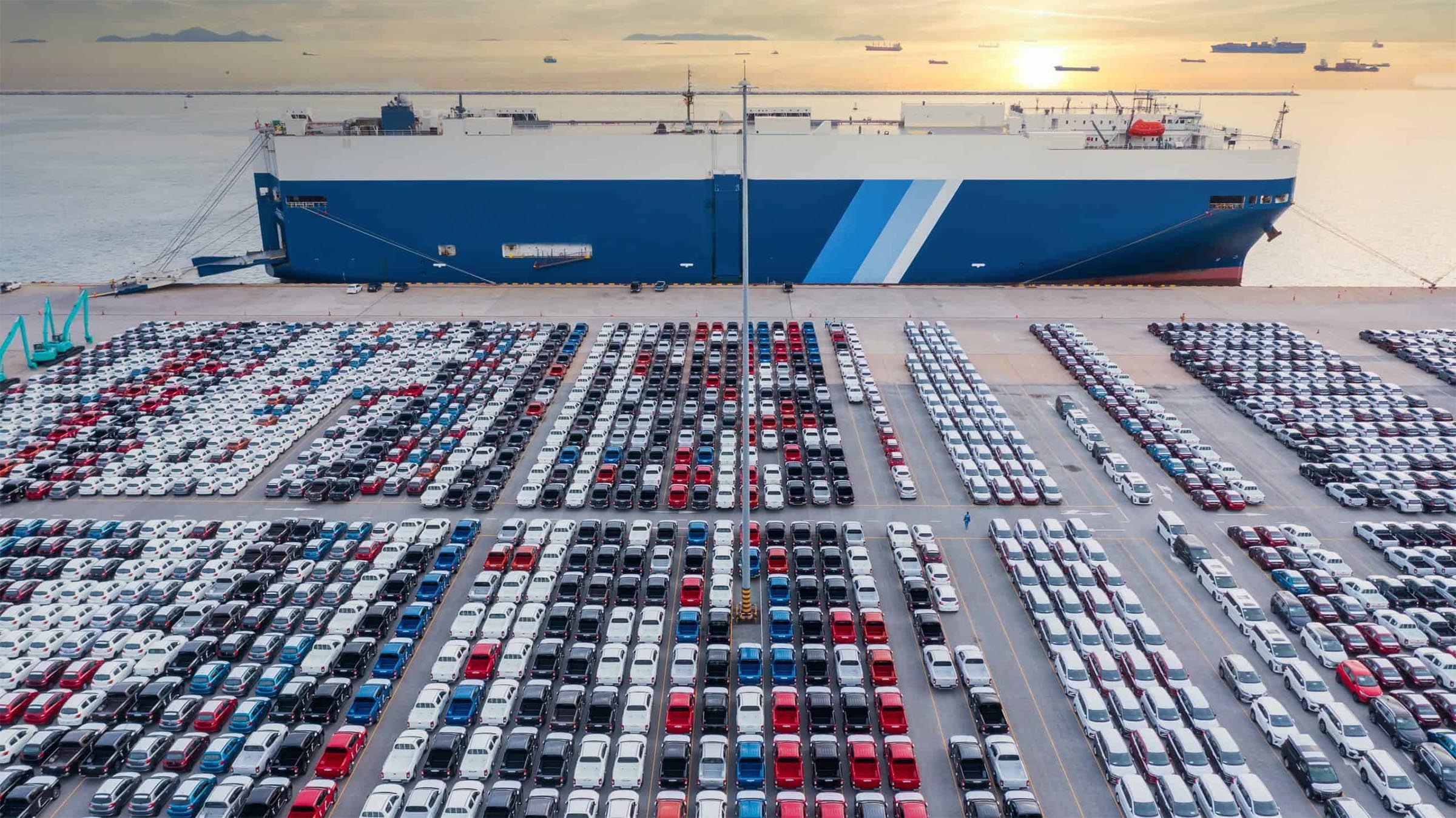
China’s auto exports have gone from 1 million to more than 7 million since 2020.
We’ve already been seeing foreign-owned brands restructuring their Chinese operations. Geely may be just the first Chinese automaker to openly address the same reality. But many of the domestics hope to export their way around their problems.
Barely a decade ago, with Chinese domestic sales straining the country’s production capacity, exports were little more than an afterthought – totaling barely 1 million vehicles in 2020. Last year that jumped to 7.1 million and it could grow even more in 2026. In Mexico, Chinese-made vehicles accounted for roughly 20% of the automotive market last year. The figure was closer to 35% in Chile. China has captured a 6.6% market share in the EU, while its exports accounted for roughly one in four new vehicle registrations in Great Britain last year.
As part of a broader deal triggered by its trade war with the U.S., Canada recently agreed to allow about 49,000 Chinese vehicles to be sold there this year. That will grow to 70,000 in the fifth year of the agreement. Surrounded, as it were, the United States so far retains its own Great Wall, tariffs of over 100%, effectively locking out Chinese-made vehicles. Despite fierce concerns in Congress, and warnings from Detroit – Ford CEO Jim Farley warning of an “extinction event” should the doors open – many analysts fear it’s just a matter of time until we see BYD, Geely and other Chinese showrooms open across the U.S.
Americans grow open to Chinese imports
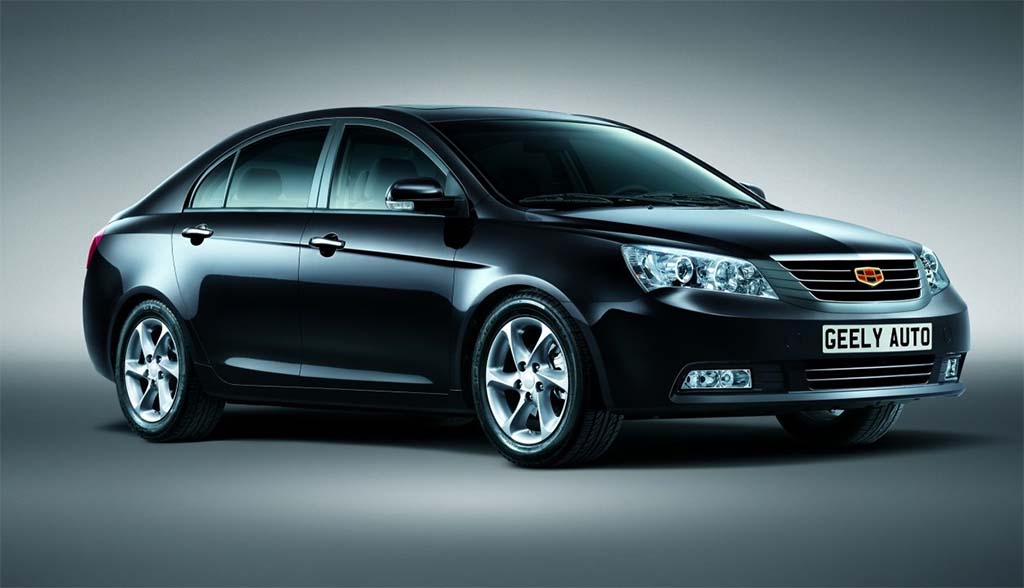
Chinese automakers are rolling out new products like this Geely Emgrand EV at a rapid pace.
They’d apparently find a welcome audience. A recent Cox Automotive study found 38% of American motorists saying they’d consider a Chinese vehicle. The younger the buyer the more open they are, the figure rising to 69% among Gen Z cohorts. A key reason? Price. With the average transaction price for new vehicles sold in the U.S, now over $50,000, according to Cox, the Chinese could have a ready sales proposition with the sort of stylish, well-equipped – and affordable products they’re now producing.
At least the Chinese have to hope the barriers will fall. But, if anything, they face the prospect of new walls popping up around the world. Their rapid growth has led to rising calls for protectionism in Europe, Latin America and other foreign markets. To work around that we’re going to see the bigger Chinese brands follow the lead set by the Japanese and Koreans before them: setting up assembly plants abroad. Several are in the works in Europe. BYD is set to fire up a plant in Hungary. Chery has an operation going into Barcelona. And Chinese makers have inked European joint ventures with Stellantis, Volkswagen and Ford. Meanwhile, GAC Motor is set to open up the first Chinese-owned plant in Mexico later this year.
The Chinese have plenty of challenges of their own to deal with and their path to industry dominance is far from certain. But there’s a clear reason why foreign manufacturers are – and should be worried.
This story first appeared in The Car Collective. It features daily columns by some of the world’s best-known automotive journalists. You can read more – and subscribe – at TheCarCollective.substack.com.




Hi Paul, checking out your articles, this one strikes home.
You asked for feedback….here’s some from personal experience.
We own a home in Aruba, splitting the year between there and PA (snowbirds, just go a bit farther south).
In Aruba, Chinese autos are taking over, particularly EVs.
We purchased a 2026 Dongfeng Box. It’s small size (to include battery and thus 200mi range) is a perfect fit for the small island (21 miles long by about 8 wide).
What is extraordinary about the car is how well made and smartly designed in many ways it is – for the extra low price.
Yes, BYD is the leader in Aruba, is might be a slightly better vehicle (emphasis on maybe), but didn’t like the styling, nor the extra $9k for a similar vehicle.
Notes about the car: better solid feel with door than cars 2x as much. The backup camera is 100x better than the 2026 BMW i4’s I drive in PA.
Love some the simplistic features (a couple others, not so much, lol) like unlock to start/lock to turn off.