
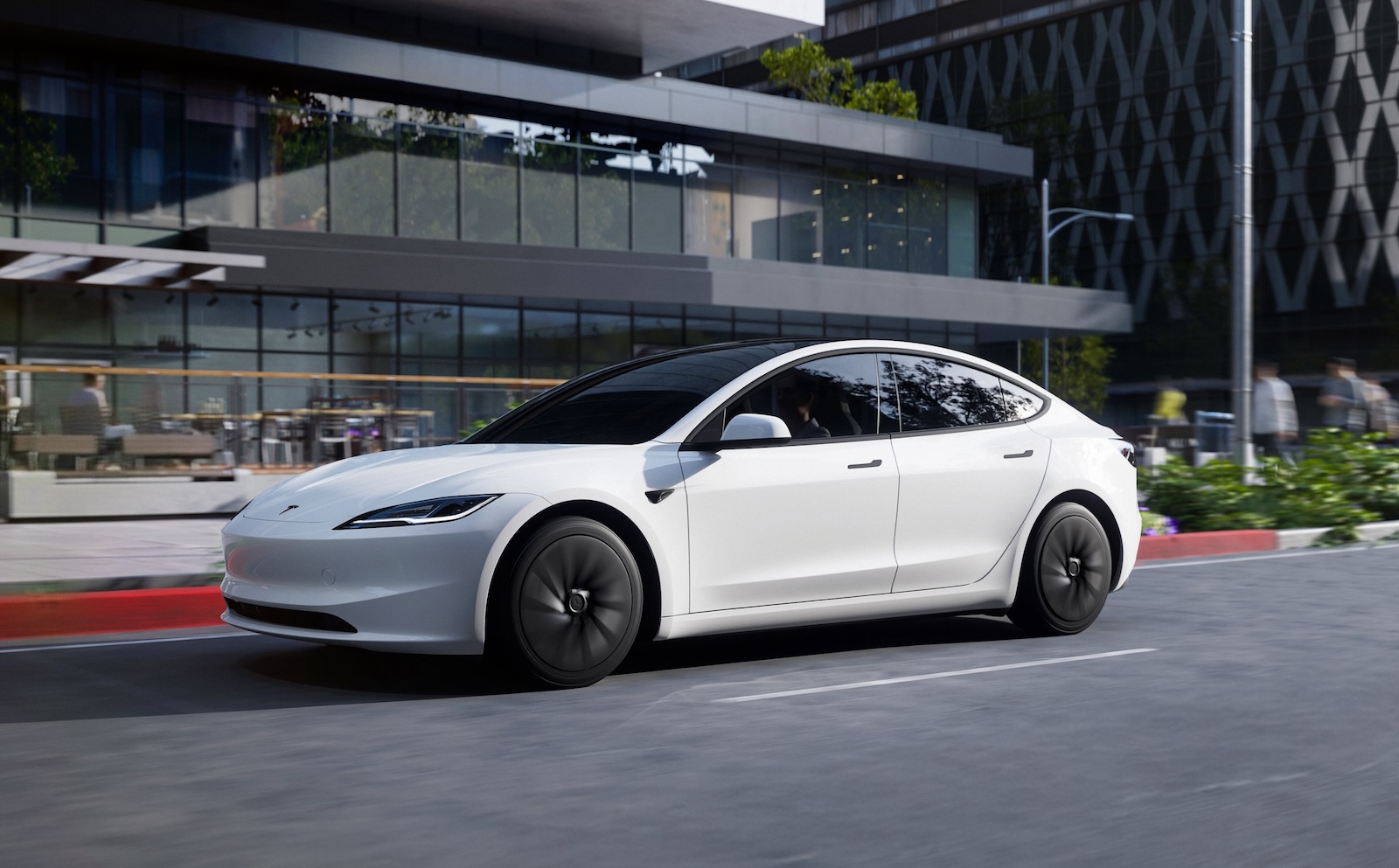
Automakers are coming under increasing pressure to move production to the U.S. – with hefty tariffs penalizing not only products imported from abroad but those built in the States using foreign parts. Which products are the most “American-made”? A new study finds Tesla and Jeep at the top of the list, though Japanese brands make up six of the top 10 spots, reports Headlight.News.
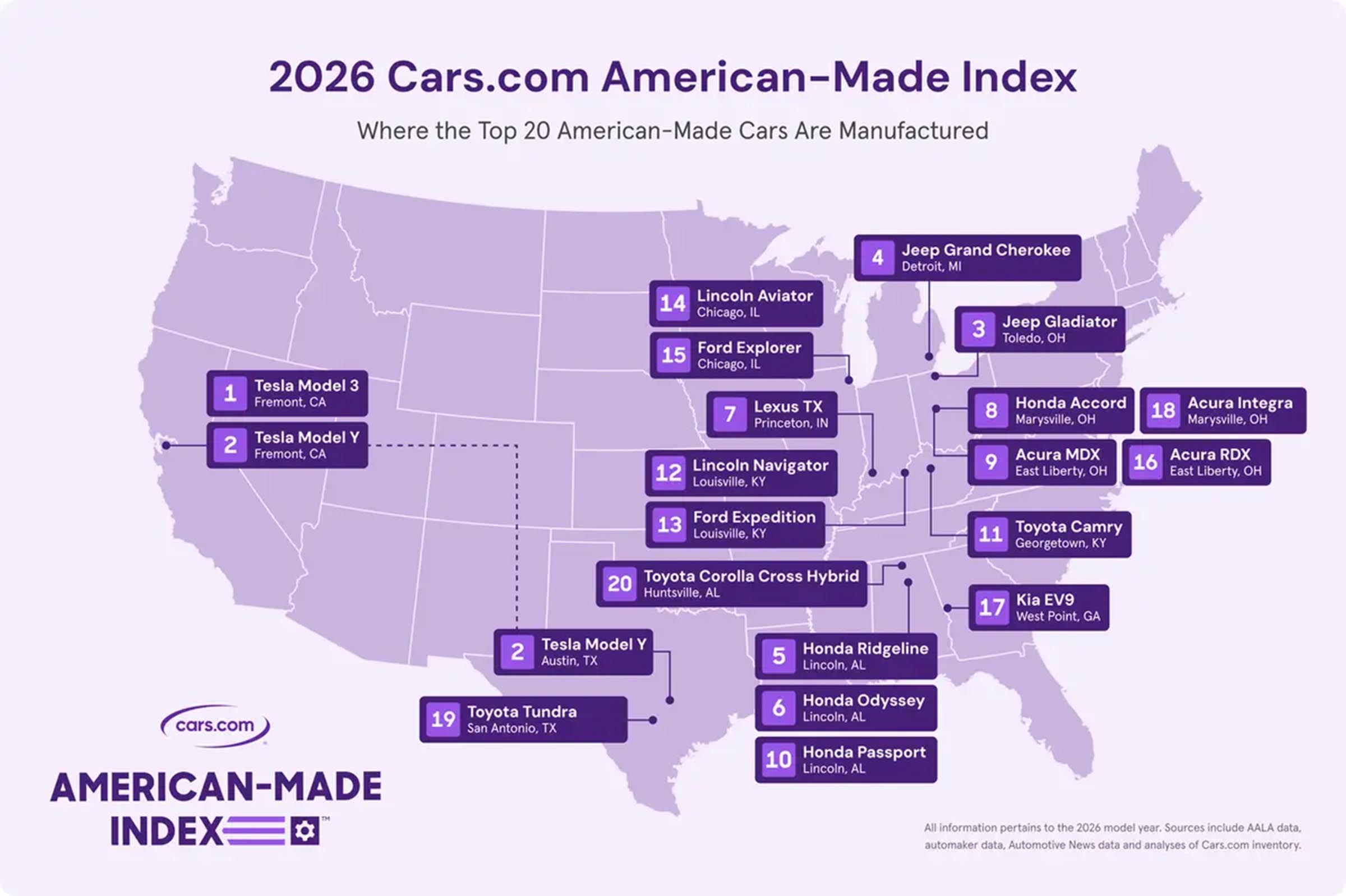
Graphic courtesy: Cars.com.
New vehicle prices have topped an average $50,000 this year, a figure that’s been rising faster than overall inflation. One reason: the hefty tariffs Pres. Donald Trump has enacted not only on foreign-made models but also on those assembled in the U.S. using imported steel, aluminum and parts.
It’s not just the higher cost for imported products but there’s a growing demand on the part of American motorists to buy domestic products/ And that’s where the latest in a long-running series of studies by Cars.com comes in. The website has, for the past 21 years, carefully scrutinized not only where the vehicles sold in the U.S. come from but also where they get their parts, components and raw materials.
Of 379 vehicles available for the 2026 model year, the website narrowed down to just 86 the number of vehicles that can lay claim to being all, or at least significantly “American-made.” And while the White House might be claiming victory in its bid for local production, those figures actually are down from 99 models out of 400 covered by the Cars.com study last year.
Shifting tide
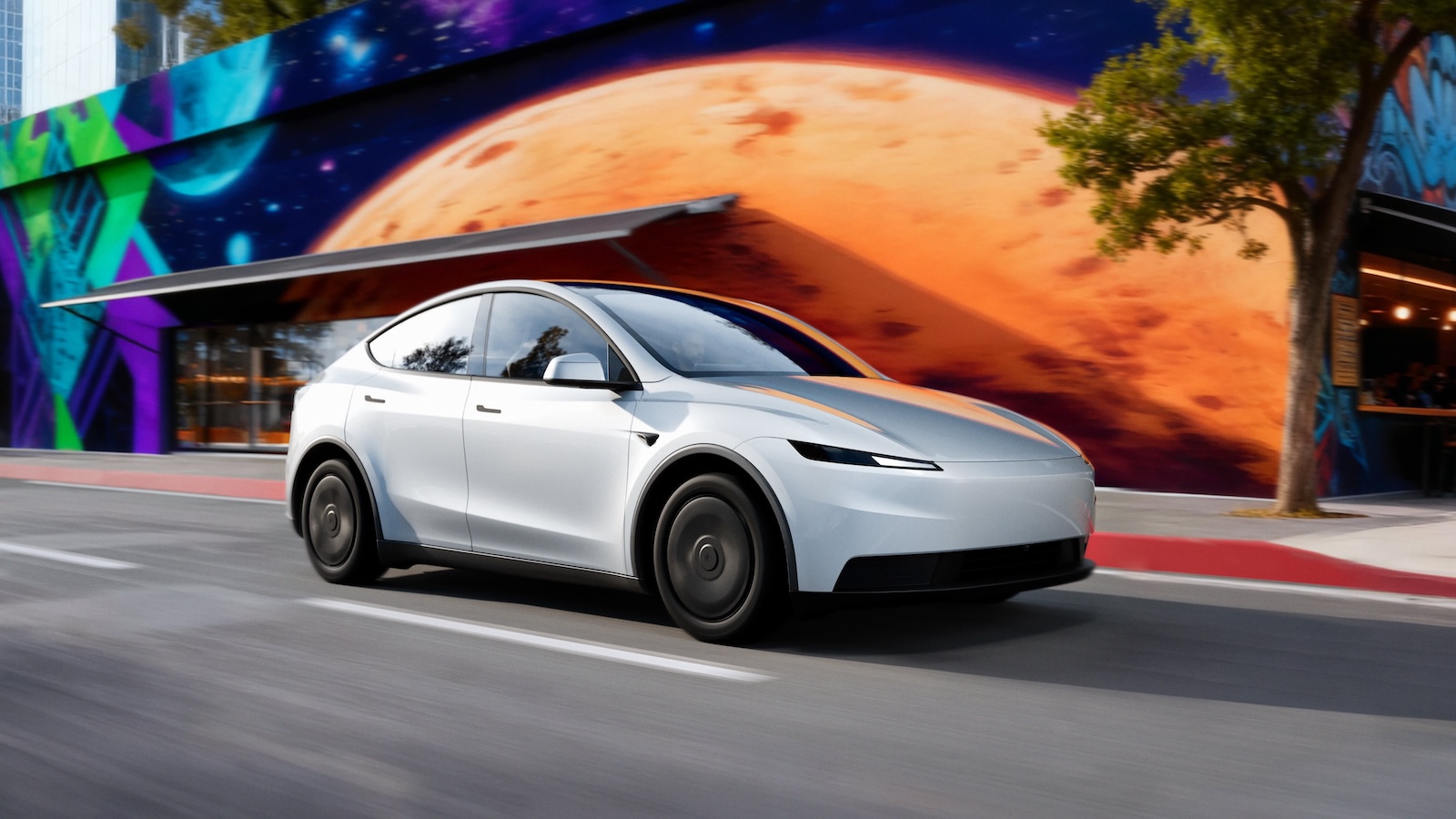
The Tesla Model 3, (lead image) was the most American-made model, followed by the Model Y shown here.
On the positive side – at least for those who want to “Buy American,” “many” of the vehicles that topped the list in the study “have higher domestic parts content percentages,” the author of the story noted in his summary. That, he added, “suggests changing supply chains in service of reshoring at least some elements of production.”
That’s become apparent to anyone following news from the auto industry. We’re seeing a number of manufacturing shifting to domestic American suppliers who, in turn, are moving more parts production back into the U.S.
That said, there’s no such thing as an “all-American vehicle.” Even the winners in the study – Tesla nabbing the top two spots, followed by two Jeep models – still depend on some foreign-made parts and componentry. In some cases, it’s virtually impossible to find U.S. sources for things like wiring harnesses and semiconductors. Among the study’s top 10 models, they only reach the 70% average domestic content level.
Who tops the list?
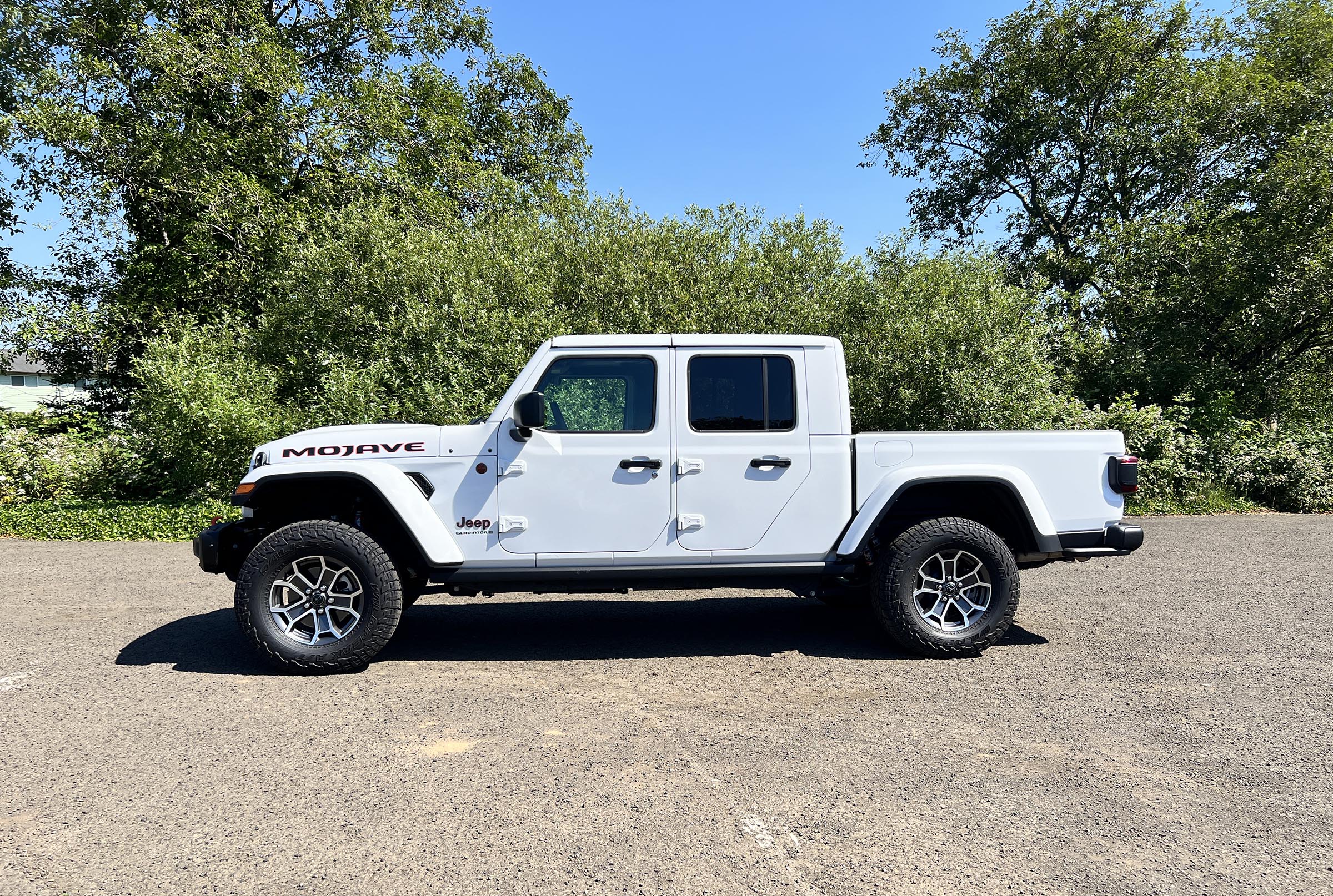
Jeep had two models in the top 10, including the Gladiator.
In descending order:
- Tesla Model 3
- Tesla Model Y
- Jeep Gladiator
- Jeep Grand Cherokee
- Honda Ridgeline
- Honda Odyssey
- Lexus TX 350
- Honda Accord
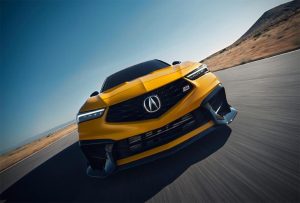
- Acura MDX
- Honda Passport
Until a few years ago, the Japanese had a virtual lock on the American-made Index – and other, similar studies. Even now, only nine models from General Motors and Stellantis land in Cars.com’s top 25, a figure growing to just 21 out of the top 50. Among the full 86 models cited by the website, Detroit Big Three brands accounted for just 28.
More Auto News
- Jaguar to Debut Critical New Type 01 EV in October
- GM, Ford Want to Become the “Arsenal of Democracy Again”
- Gas Prices Dip Below $4 – But Could Take Months to Reach Pre-War Levels
What does the study consider?
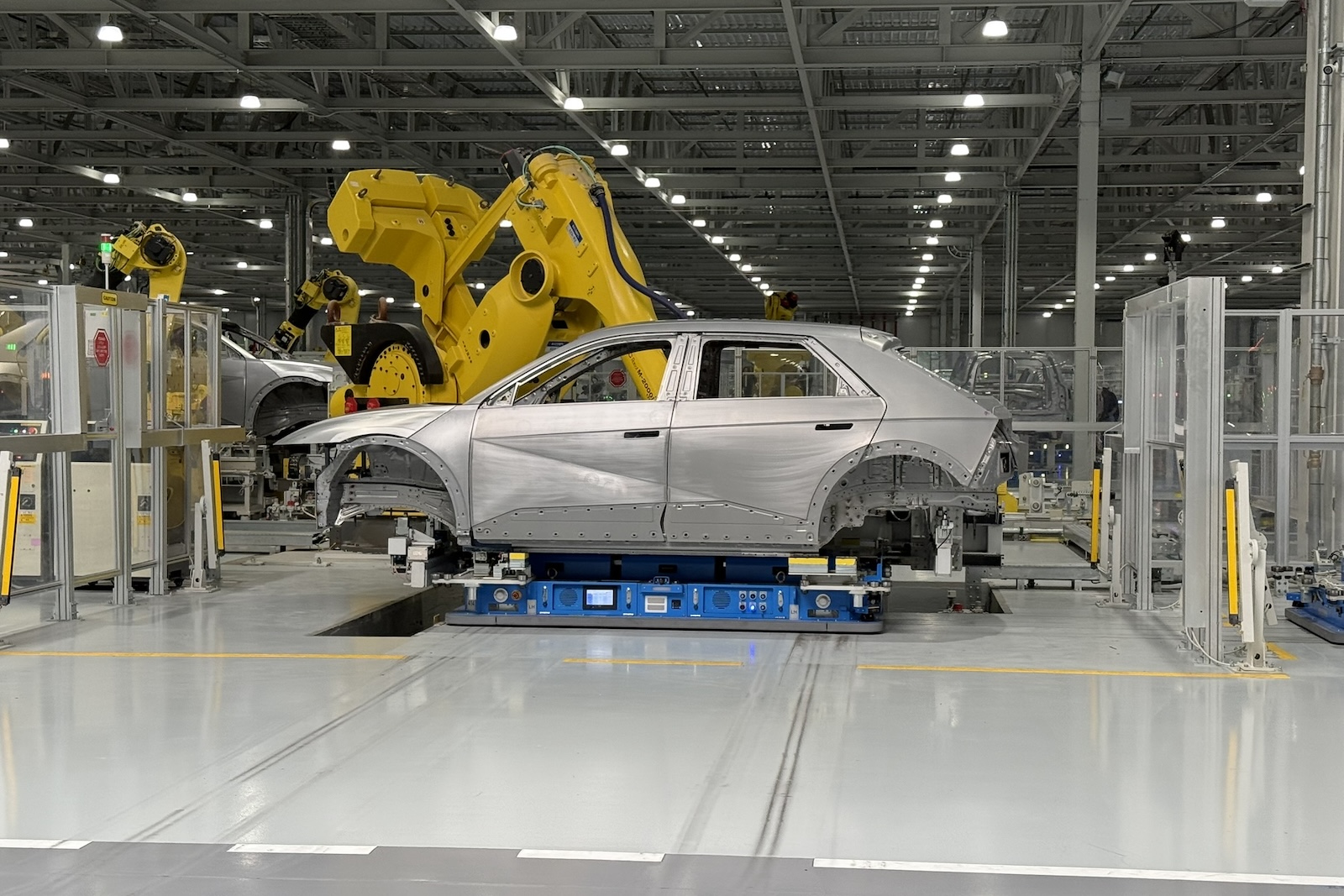
More products from foreign-owned manufacturers are being assembled in U.S. factories, like this Hyundai Metaplant in Georgia.
A variety of factors go into the final determination, including the plants where each vehicle is assembled. That’s a subject where the foreign-owned brands have gained ground as they continue opening more American assembly lines. Toyota Motor Corp. uses factories in places like Alabama, Indiana, Kentucky, Mississippi and Texas to assemble about 70% of the vehicles it sells in the United States. Hyundai Motor Group recently opened a third U.S. plant and is expected to further boost American production as part of a $26 billion investment program.
Other factors, said Cars.com, include:
- Percentage of U.S. and Canadian parts
- Countries of origin for all available engines
- Countries of origin for all available transmissions
- U.S. manufacturing workforce.







0 Comments